Last updated November 18, 2026



Free written scope consultation - allowances, timeline, and change-order rules on paper before a single trade is scheduled
How to Hire a Construction Contractor in East Los Angeles: A Step-by-Step Guide
Most people hire a contractor by collecting three bids and picking the middle number. In East Los Angeles, that approach fails more often than it works. The reason is simple: the area has a dense market of cash-only operators, unlicensed labor, and specialty subcontractors who are excellent at one trade and blind to everything else on your project. A low bid from a contractor who can’t coordinate a roof replacement with window installation doesn’t save you money. It creates a new set of problems while solving the old ones.
This guide covers what to actually verify before you sign, how to read a scope of work instead of a total, and how to structure a contract that protects the whole job. If you’re planning work in East Los Angeles, from a kitchen remodel to a full exterior envelope, these steps apply to every category.
Quick Answer
To hire a construction contractor in East Los Angeles, verify their CSLB license number, confirm active workers’ comp insurance and a contractor’s bond, demand a written scope of work that names materials by brand and product line, and confirm who pulls the permits. Skip the three-bid habit and compare line items across one detailed scope document instead. A contractor who can’t answer those questions in writing before you sign isn’t the contractor for the job.
Styles & brands we work with
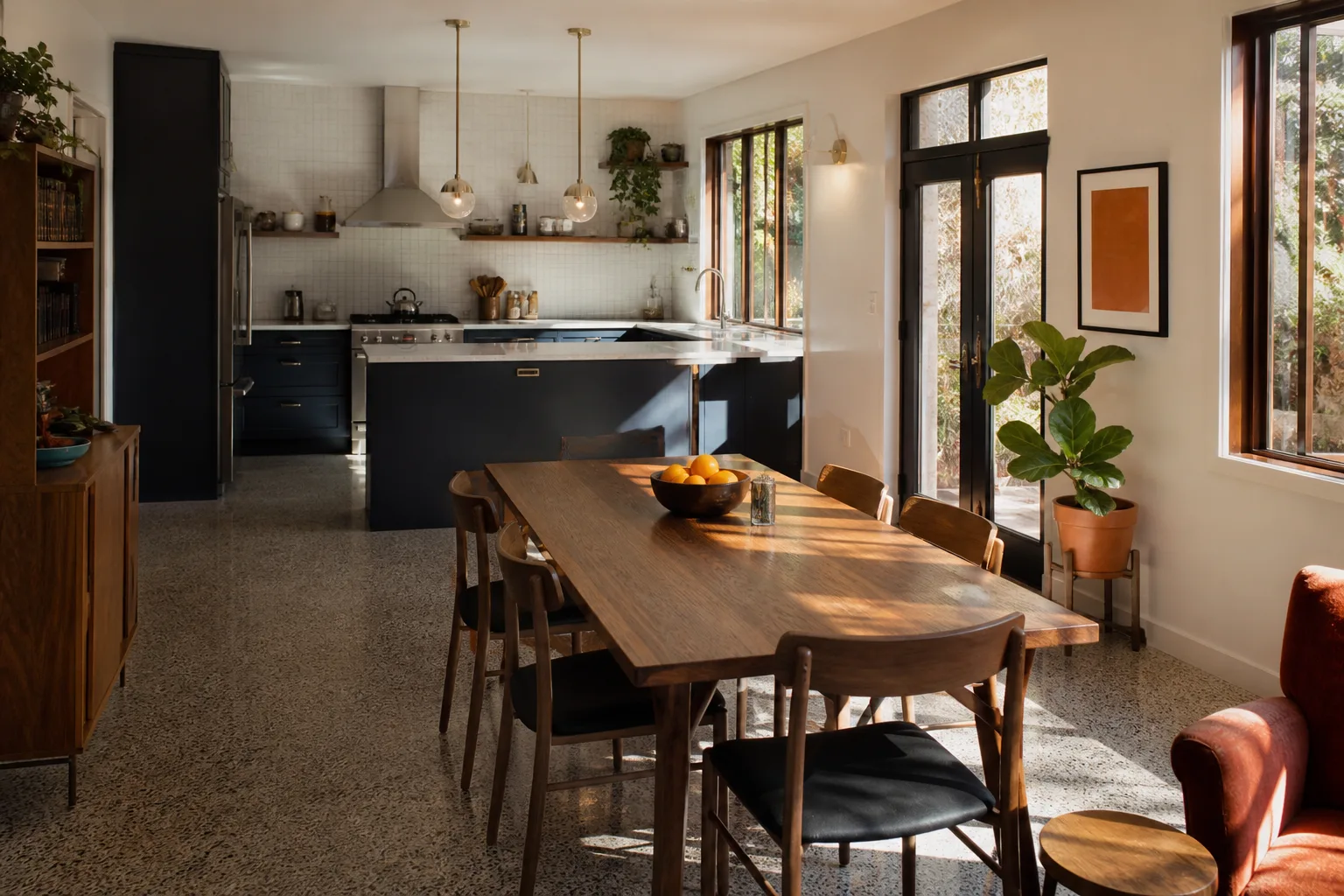
- Kitchen remodeling
- Bathroom remodeling
- Home additions & ADU
- Roofing
- Windows & doors
- Driveway & pavers
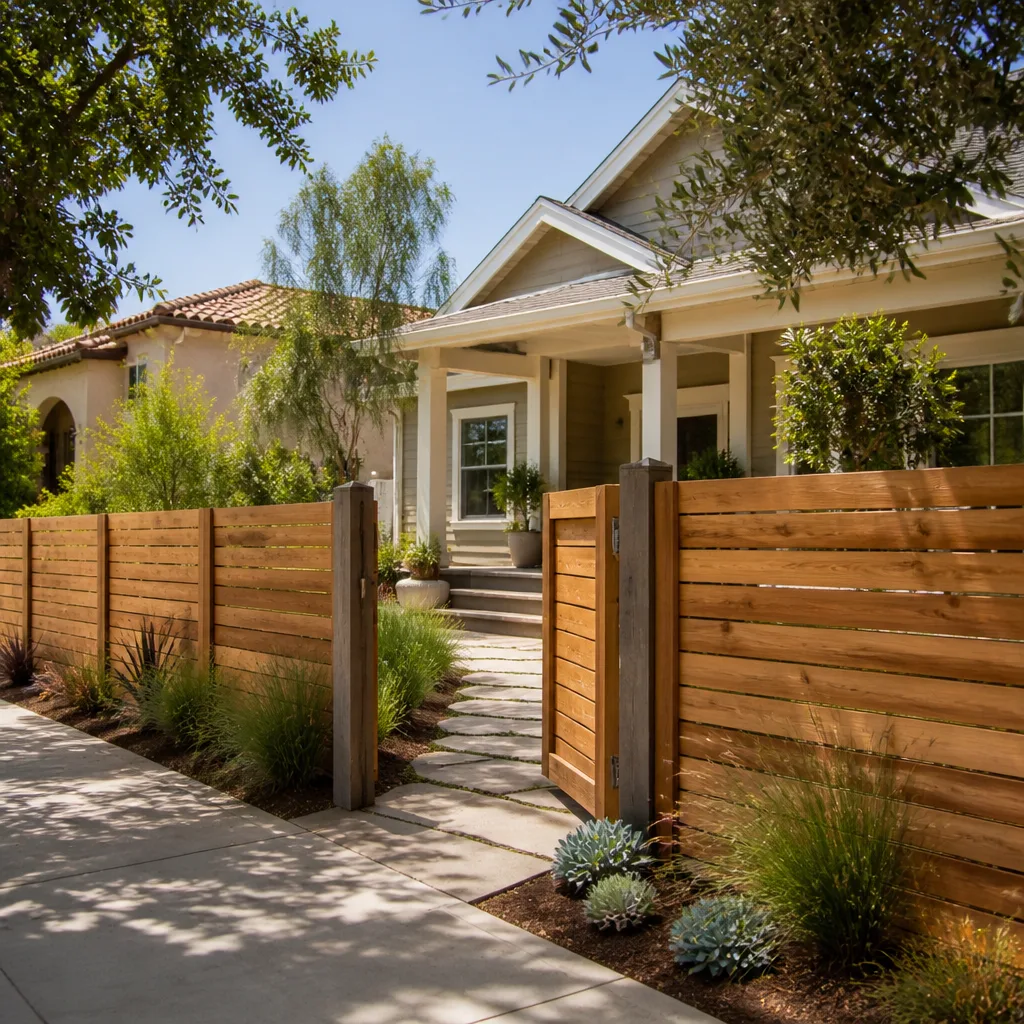
- Fence
Table of Contents
- Verify the CSLB License, Workers’ Comp, and Bond
- Compare Line Items, Not Totals
- Red Flags Specific to the East Los Angeles Contractor Market
- How to Structure a Contract That Protects the Whole Job
- One Multi-Trade Contractor vs. a GC Who Subs Everything
- The Permit Reality in East Los Angeles
- Questions to Ask Before You Sign
- Common Mistakes to Avoid
Verify the CSLB License, Workers’ Comp, and Bond
Anyone can hand you a license number that looks official. A license number that exists is not the same as a license that’s active, in good standing, and covers the trade you’re hiring for. The CSLB maintains a public database you can search for free, and running a real verification takes about ten minutes. It’s the single most useful ten minutes you’ll spend on your project.
Here’s the sequence we recommend to every homeowner:
- Look up the license number on the CSLB site. Confirm the status says active, not expired, suspended, or “licensee is not currently licensed to perform work.”
- Check the classification. A Class A or B general building license covers most residential work. A Class C specialty license only covers the specialty trade it’s issued for. If someone is quoting a full exterior including roofing, windows, and fencing, they need a license classification that covers all of it.
- Verify workers’ comp. If a contractor has employees, the CSLB record shows whether they carry active workers’ compensation coverage or have an exemption. A contractor with no coverage and no exemption can leave you exposed if a worker gets injured on your property.
- Verify the contractor’s bond. The bond is a small dollar amount relative to a full remodel, but it’s a real backstop if the contractor walks off the job or fails to pay material suppliers. The CSLB record shows whether the bond is active and current.
- Match the business name. The name on the license should match the name on the contract, the estimate, and the business card. Mismatches are a quiet flag that deserves a direct question.
In East Los Angeles, this step matters more than it does in most of LA County. Unincorporated areas have seen a high concentration of unlicensed contractor complaints, and the trades that get hit hardest are the ones aging housing stock needs most: roofing, windows, and kitchen and bath remodels in older single-family homes. A full CSLB check filters out most of that risk before it reaches your driveway.
Compare Line Items, Not Totals
Three bids on a remodel are not three comparable numbers. They’re three different documents describing three different jobs that happen to share a title. One quote will spec out GAF or CertainTeed roofing systems, and another will say “standard architectural shingles.” One will name wellborn cabinetry with a specific door style and species, and another will say “custom cabinets.” Comparing the totals tells you nothing useful. Comparing line items tells you everything.
Insist on receiving a written scope of work, one per bidder, with these components:
- Materials by brand and product line. Not “impact-resistant windows,” but “window brand and product series.” Not “shingle roof,” but “CertainTeed or GAF, specific product line.” Not “quartz countertops,” but “Cambria or Silestone, specific surface name.”
- Quantities by item. Square footage of roofing, number of windows, linear feet of fencing, square footage of pavers.
- Site protection and demolition. Who protects the landscaping, who hauls debris, and what’s included in the base price.
- Labor commitments. Number of workers, duration per phase, and start date.
- Permit responsibility. Who pulls the permit, who pays for it, and who schedules inspections.
- Allowances. Any line marked “allowance” is a placeholder, not a price. Pin it down before signing.
Once you have three detailed scopes, compare line by line. A bid that looks $8,000 lower on the total often has a shingle product line worth far less, no site protection line, or a fixture allowance half the quality of the next bid. The comparison you’re actually making is materials and scope, not price. Price follows scope.
Every written estimate in our process is a line-item quote with named products, and the written estimate sets the final price. That’s the format to demand from anyone bidding on work in East Los Angeles, regardless of the trade.
Red Flags Specific to the East Los Angeles Contractor Market
The generic contractor warning list (no license, no insurance, bad reviews) misses what actually goes wrong in East Los Angeles. The failure patterns here are specific, and they’re worth watching for directly in the first conversation.
- No physical address, or an address that doesn’t match the CSLB record. A real business has a verifiable business location. A PO box alone, or a residential address that doesn’t match the license, is worth asking about before you sign.
- Payment in full upfront. For a full remodel or a full exterior, requesting the entire amount before any work starts is a serious red flag. A legitimate deposit schedule tracks work as it happens, tied to milestones in the contract.
- Refusal to pull permits. In East Los Angeles, unpermitted additions and expired permits on older homes are common, which makes some contractors assume nobody cares. A licensed contractor pulls the permit from the agency with jurisdiction (the county or the city, depending on the property), schedules the inspections, and hands you the sign-off at the end.
- Only one trade on the license. If the license classification covers only roofing or only windows, that contractor can’t legally quote a full exterior that includes both. The bid will look complete, but the work will be subbed out to a separate entity with its own contract, its own insurance, and its own warranty.
- Verbal-only change orders. The “we’ll figure it out” attitude that works fine on a small repair becomes a daily habit on a remodel. Written change orders with pricing are the rule, not the exception.
- Pressure to start immediately. A contractor who can’t produce a written scope of work before being asked twice isn’t going to produce one during construction either.
None of these flags requires distrust in everyone you meet. They require a specific set of questions before money changes hands. In our experience working East Los Angeles projects, the contractors who pass all six checks tend to be the ones who are blunt about what they cover and what they don’t.
How to Structure a Contract That Protects the Whole Job
The contract is where a project either stays on track or drifts toward scope creep, change-order disputes, and finger-pointing between trades. The single most useful move is to attach a full materials specification to the contract and make it enforceable. “Standard materials” in the body of a contract means nothing. A named product line does.
At minimum, the contract should include:
- A complete materials specification by brand and product line. For a kitchen, that means cabinetry by brand (KraftMaid or wellborn), countertops by surface (Cambria, Caesarstone, or Silestone), fixtures by manufacturer (Kohler, Grohe, Moen, Delta, Blanco, or American Standard), and tile by vendor and series. For a roof, it means GAF, CertainTeed, or Owens Corning with the specific product line. For a driveway, that means a specific paver brand (Belgard or Unilock, for example) and a paver series.
- A payment schedule tied to milestones. Deposit at signing, additional draws at defined stages of completion, balance at punch list. Every milestone should be verifiable.
- Defined change-order procedure. Written, priced, signed before the change is performed. No verbal approvals.
- Permit and inspection responsibility. Named explicitly, with the understanding that the contractor pulls and closes out permits.
- Start and completion dates with the duration per phase. Give a start date and a phased schedule so you can measure progress.
- Warranty terms stated in writing. Manufacturer warranties transfer differently from workmanship warranties. Know what’s covered, by whom, and for how long before you sign.
- Cleanup and final walk-through procedure. A written punch list signed by both parties at completion.
East Los Angeles properties often have older structures, which means the contract should also address hidden conditions. Older homes commonly have framing that has shifted, walls that aren’t plumb, or existing work done without permits. A good contract spells out how conditions discovered during the job get priced, before they come up. If the answer is “we’ll see,” the answer will be a surprise invoice.
One Multi-Trade Contractor vs. a GC Who Subs Everything
A general contractor who subcontracted out every phase of a full remodel and a single multi-trade contractor who plans and executes the work under one contract produce different outcomes. The differences are in liability, communication, and warranty clarity, and they get bigger the wider the scope of the project.
The liability chain is the first difference. When a GC subs every phase, you have a contract with the GC and the GC has contracts with each sub. If roofing leaks into a window opening six months later, the GC points at the roofer, the roofer points at the window installer, and your written warranty is only as good as the GC’s ability to enforce the sub contracts. With a single multi-trade contractor who performs the trades under one roof, there’s one number to call and one warranty to invoke.
Communication is the second difference. In a seven-trade project, the sequence of work matters: roofing goes before windows, because the roofing material laps over the window flanges, and if windows go first, the next phase damages the finished work. A single contractor plans that sequence as part of the estimate. A GC who subs each trade does their best to plan it, but each sub arrives with its own schedule and rarely coordinates sequencing with the trades before and after.
Warranty clarity is the third difference. Manufacturer warranties on certainteed or GAF roofing, on KraftMaid cabinetry, or on Kohler fixtures depend on proper installation. A single contractor who installed the product and read the spec sheet stands behind the warranty as installed. A chain of subs usually means the manufacturer’s warranty and the installer’s warranty are split across entities that no longer talk to each other after the check clears.
For projects where the scope spans multiple trades, from roofing and windows & doors through driveway & pavers, our model is to plan the whole sequence under one contract, so the phases protect each other instead of damaging each other. You can read more about the full range of services on our construction East Los Angeles page.
The Permit Reality in East Los Angeles
Permit jurisdiction in East Los Angeles depends on the property. Much of East Los Angeles is an unincorporated area of LA County, which means the County’s building department has jurisdiction, not the City of Los Angeles. Some addresses fall under a different agency. This matters because a contractor who routinely pulls permits in the City of Los Angeles may not be current on the County process, and vice versa.
For each project type, ask directly which agency will issue the permit:
- Roofing. Most roof replacement and re-roof projects require a permit. Overlay vs. tear-off also affects permit requirements; verify before work starts.
- Windows and doors. Replacement windows typically require a permit when the size or location changes. Like-for-like replacements may or may not, and the answer is project-specific.
- Fencing. Fence height, location on the property line, and materials all influence whether a permit is required.
- Driveways and pavers. A driveway apron that meets the street often requires a permit from the agency with jurisdiction over the right-of-way.
- Kitchens and bathrooms. Any work involving plumbing or electrical changes requires a permit and inspections.
- Additions and ADUs. A full ADU or home addition requires a set of permits, plan review, and multiple inspections. The permit scope is the project.
Unpermitted work in East Los Angeles is common enough that some contractors build their business model around skipping permits. That leaves you with a problem to solve at resale. The step here is simple: in writing, confirm who pulls the permit and what the permit number is once it’s issued. A contractor who can’t produce a permit number after the work starts is a contractor who isn’t going to produce one at all.
Questions to Ask Before You Sign
These are the questions that separate a real contractor from a good talker. Ask each one, and ask for written answers.
- What is your CSLB license number, classification, and current status? Then verify it independently.
- Do you carry active workers’ comp coverage and a current contractor’s bond? Ask for the CSLB record, not a verbal yes.
- Which trades do you perform directly, and which do you sub? For a multi-trade project, the answer determines who actually stands behind the work years later.
- Can you provide a written scope of work naming every material by brand and product line? If yes, read it line by line against any other bid.
- Who pulls the permit, and which agency issues it for this address? Confirm before signing.
- What is the payment schedule, and how do milestones line up with the work? Full payment upfront is a hard stop.
- What are the warranty terms on labor and on materials? Get the terms in writing and understand how manufacturer warranties interact with the installer’s warranty.
- What is the change-order procedure? Written and priced, signed before work.
- How long is the project schedule, and what’s the completion target? Ask for a phased schedule, not a single date.
For kitchen and bathroom projects specifically, add one more: which cabinet brand and which countertop surface are in the base price? The difference between a KraftMaid kitchen and an unbranded cabinet line is a material reality, not a marketing label. The same applies to Cambria vs. an unnamed quartz surface. If the estimate doesn’t name it, the estimate doesn’t cover it.
Common Mistakes to Avoid
- Picking the middle bid without reading the scope. The middle number sounds safe, but it’s not a comparison. Read every line item against the other two before the totals get a vote.
- Accepting “standard materials” in the contract. That phrase covers everything from premium to builder-grade. Name the brand and the product line, or you don’t know what’s going in.
- Not running the CSLB license check. A number that looks official can belong to a suspended or expired license. Twenty minutes on the CSLB site verifies it.
- Skipping the workers’ comp check. An uninsured crew on your property is your liability if someone gets hurt. The CSLB record shows the coverage status; there’s no reason to take the contractor’s word for it.
- Assuming the contractor is current on East Los Angeles permit jurisdiction. Unincorporated East Los Angeles building permits route through the county, not the city. A contractor whose permit experience is all LA city work may not be current on the county process.
- Splitting a multi-trade project across contractors to save on individual bids. The coordination cost and the risk of one trade damaging another’s finished work usually exceeds any per-trade savings. Roofing before windows, in a planned sequence, is cheaper than re-doing windows after roofing has already been installed.
- Approving verbal change orders. The verbal “we’ll add that in” becomes a disputed invoice at completion. Every change gets written and priced before the work is performed.
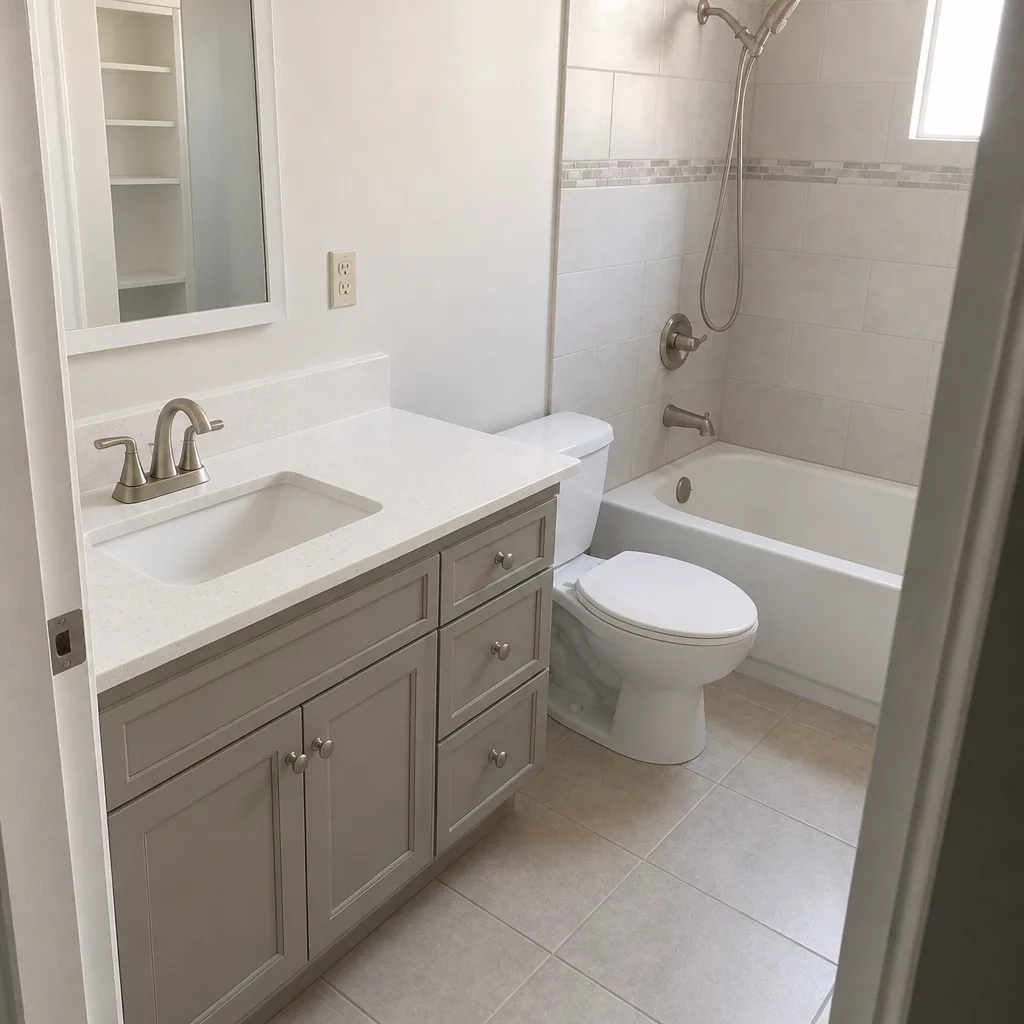
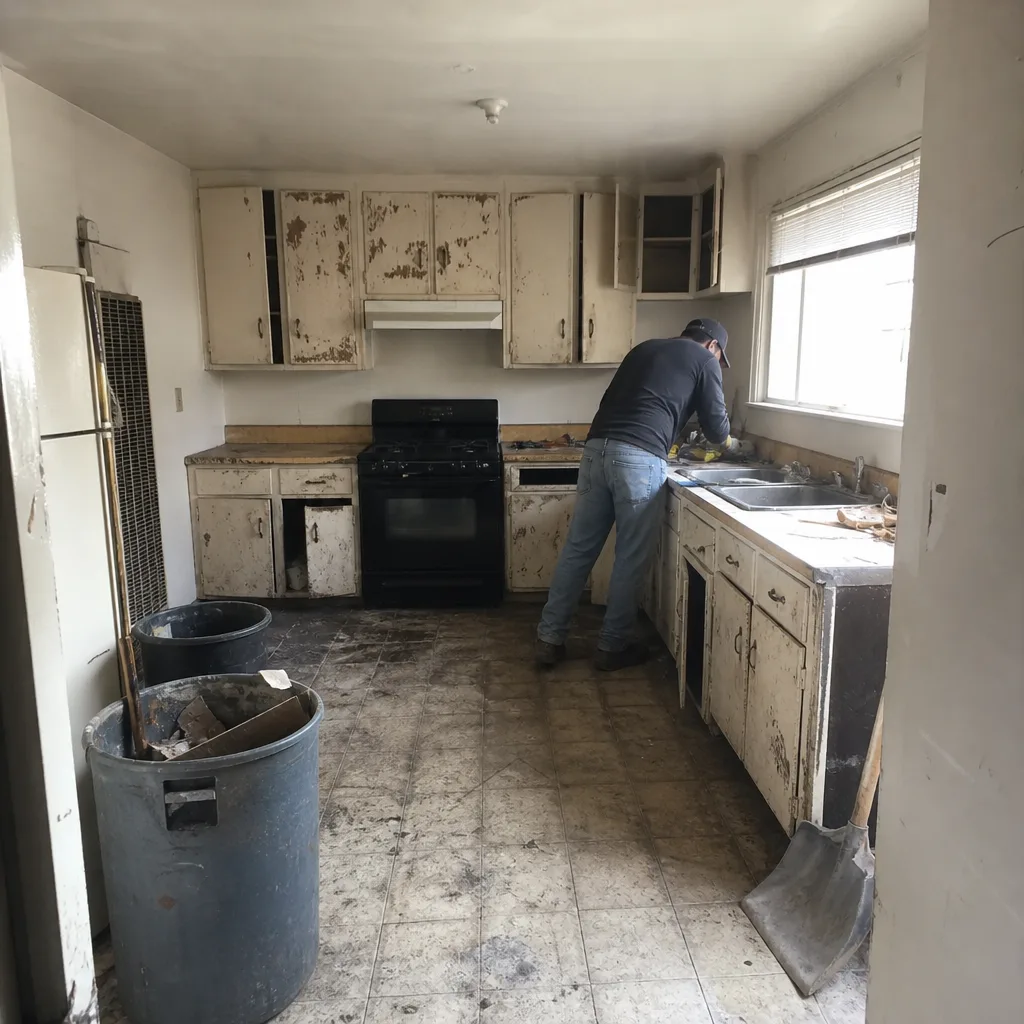
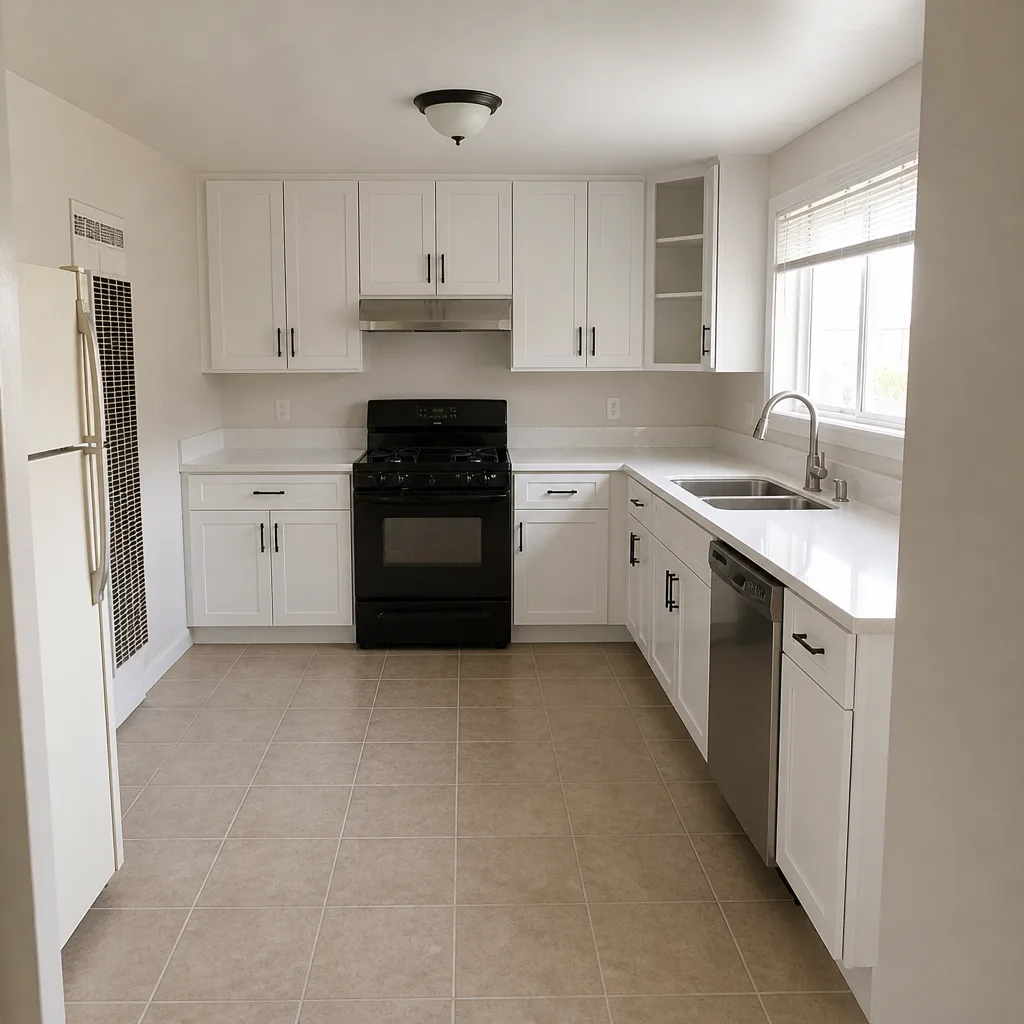
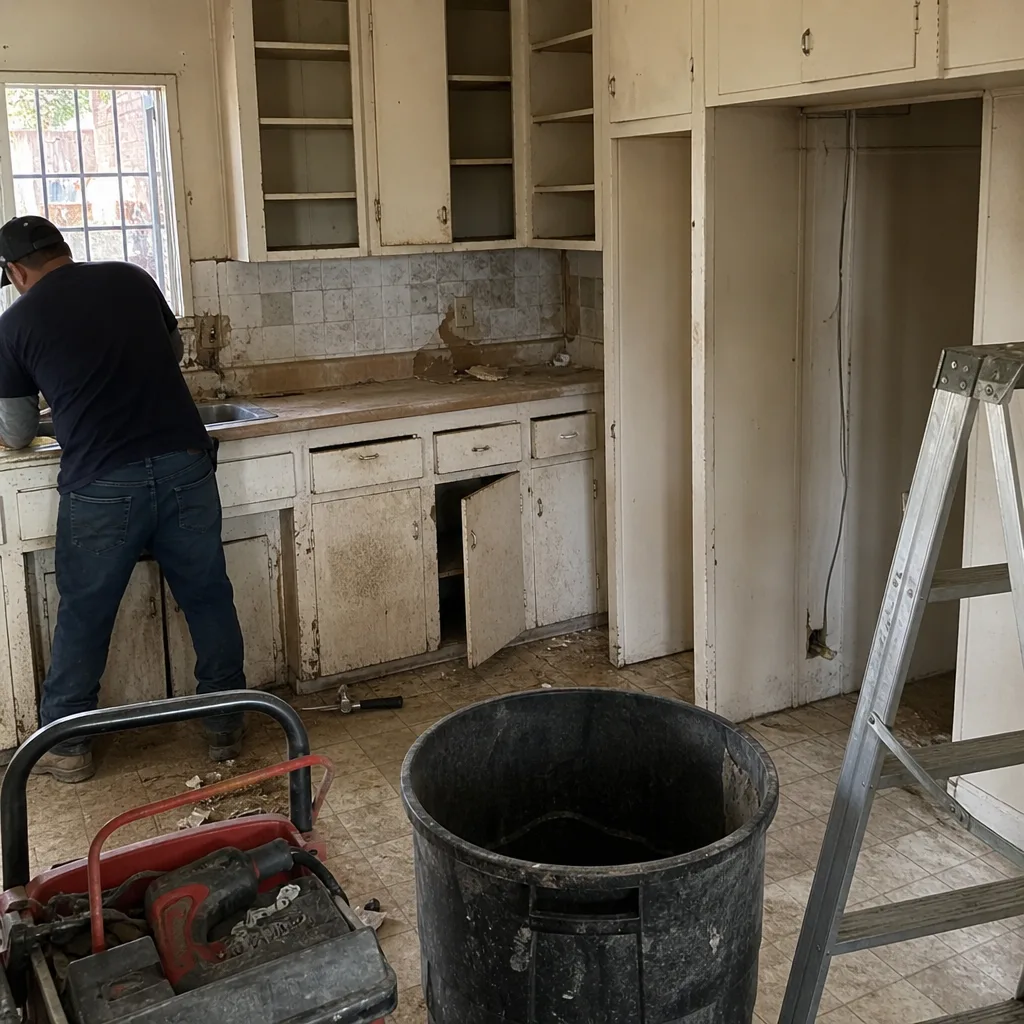
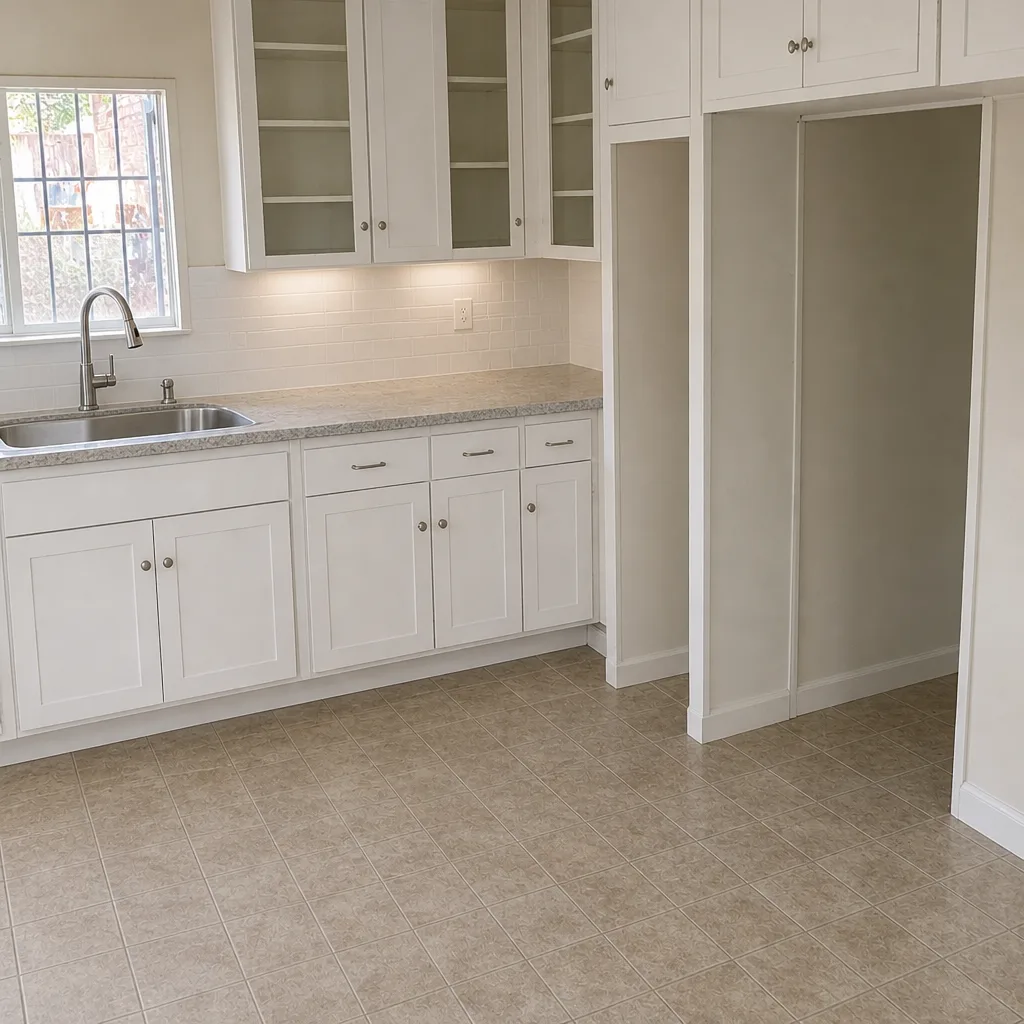
See the difference
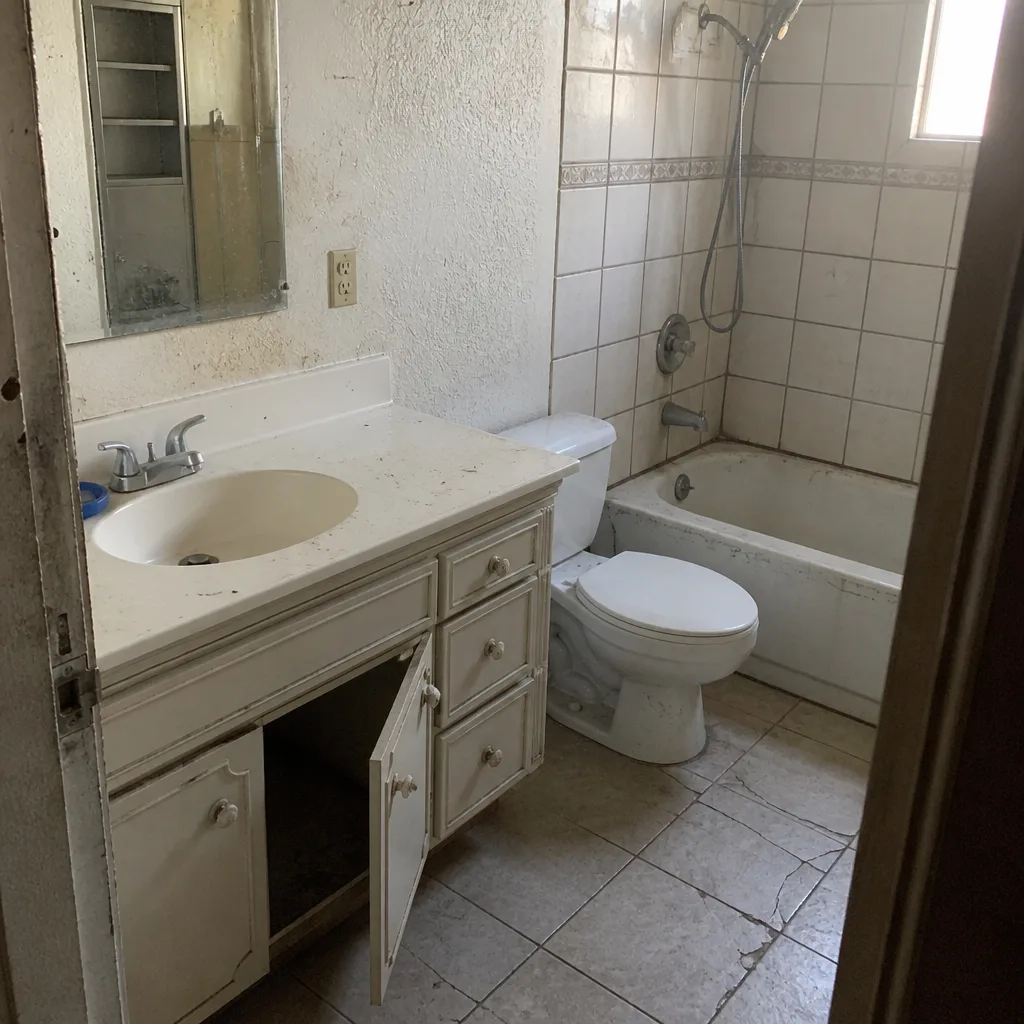 Before
 After
 Before
 After
 Before
 After
When to Call a Professional
Some jobs are small enough to handle yourself. The line is clearer than most homeowners assume. Any work that requires a permit, any work that touches roofing or structural elements, and any work that connects a plumbing or electrical system to the house belongs with a licensed contractor. In East Los Angeles, where older housing stock often has unpermitted past work, the correct answer is usually to bring in a professional even for what looks like a repair: an apparently cosmetic issue in an older home can trace back to framing, water intrusion, or a connection that needs more than a patch.
If the project spans more than one trade, from fence installation through a kitchen remodel, the coordination overhead of running it yourself is substantial. A single contractor who plans the phases, pulls permits, and stands behind the warranty is worth the time you’d otherwise spend chasing four separate businesses. Construction East Los Angeles offers free estimates in East Los Angeles. Call (844) 320-6084. We answer 24/7. Fast dispatch from 7am to 7pm, Sunday through Friday.
Frequently Asked Questions
Look up the contractor’s license number on the CSLB’s public database and confirm the status says active, the classification covers the trade you’re hiring for, workers’ comp coverage is current or exempt, and the contractor’s bond is active. A license number that exists but is expired or covers only a different trade isn’t a valid verification. Run the check yourself on the CSLB site rather than accepting a scanned copy of the license. Call (844) 320-6084 for an exact quote on your project; estimates are free.
Three bids compare three different specifications, so the totals aren’t comparable. A detailed scope of work with named materials, quantities, and permit responsibility lets you compare line items across bids, which is the only comparison that tells you what you’re actually buying. For kitchen projects, for example, line-item comparison catches the difference between a KraftMaid cabinetry package and an unbranded cabinet line in what looks like a comparable total. Call (844) 320-6084 to schedule your free estimate.
Yes. Work that requires a permit is permitted through the agency with jurisdiction for the property address, which in much of East Los Angeles is the county rather than the city. The permit number is provided once issued, and inspections are scheduled as part of the project. Unpermitted work leaves a problem at resale, so the permit is part of the job, not an optional add-on. Call (844) 320-6084 for a free estimate and a clear answer on what your project needs.
A single multi-trade contractor reduces the liability chain, plans the sequence of phases so earlier work isn’t damaged by later work, and stands behind a single warranty for the whole project. A GC who subs everything creates separate contracts for each trade, which can leave you with a disputed warranty when a roofing issue and a window issue overlap. For a project that spans roofing, windows, fencing, and interior work, one contract is simpler to enforce. Call (844) 320-6084 for a free estimate.
A complete contract includes a materials specification naming every product by brand and product line, a milestone-based payment schedule, a written change-order procedure, explicit permit responsibility, phased start and completion dates, written warranty terms, and a punch-list procedure. Any line marked “allowance” should be resolved before signing, and no more than a deposit should be required before work starts. Older East Los Angeles housing stock also makes a hidden-conditions clause worth including. Call (844) 320-6084 to schedule your free estimate.
Project duration depends on scope and on the permit timeline, not just the construction phase. A single-trade project like fencing or a driveway can run quickly once permits are in hand, while a full exterior or a kitchen remodel takes longer because multiple phases need to happen in sequence and be inspected. The contract should give you a phased schedule, not a single completion date, so you can measure progress at each stage. Call (844) 320-6084 for a free estimate with a realistic schedule.
The Bottom Line
Hiring a contractor in East Los Angeles comes down to verifying what the license number says, demanding a scope of work that names materials by brand, and clarifying who pulls the permits. The cheapest bid is not the cheapest project, and the fastest pitch is not the fastest schedule. A contractor who can produce a line-item scope, a CLSB record that passes the check, and a written change-order procedure before you sign is a contractor who will still answer the phone when the punch list is being closed out. That’s the standard to hold every bidder to, and the standard to hold yourself to as you compare them. If the project spans more than one trade, the contractor who can see the whole sequence is the one who reduces the coordination risk that usually eats the budget.
If you’re planning work in East Los Angeles and want a free estimate with a line-item scope of work, call (844) 320-6084. We answer 24/7. Fast dispatch from 7am to 7pm, Sunday through Friday.
Written by the team at Construction East Los Angeles.