Last updated November 18, 2026
Free written scope consultation - allowances, timeline, and change-order rules on paper before a single trade is scheduled
Choosing the Right Construction Brand: A Buyer’s Guide for East Los Angeles
Here’s a point that surprises a lot of homeowners: not every material category has a meaningful brand hierarchy. The brand of drywall buried inside a wall almost never matters. The brand of underlayment used beneath tile on a roof, though, can be the difference between a roof that dries out and one that traps moisture year after year. East Los Angeles sits in a warm, dry climate zone where sun exposure does most of the damage to exterior materials and moisture hides in the wrong places. This guide separates the categories where brand choice genuinely changes performance from the ones where it’s mostly marketing, so you can spend your budget where it counts.
Quick Answer
Brand matters most in three places for East Los Angeles homes: roofing underlayment and specialty roof systems, window glass packages (because Title 24 compliance and solar heat gain are specification decisions, not brand loyalty), and plumbing valves hidden inside walls where warranty terms actually get used. Brand matters least in standard three-tab shingles, drywall, and basic lumber. For pavers, fencing, and cabinetry, the real distinction is manufacturing method and material spec, not the logo on the box.
Styles & brands we work with
- Kitchen remodeling
- Bathroom remodeling
- Home additions & ADU
- Roofing
- Windows & doors
- Driveway & pavers
- Fence
Table of Contents
- Where Brand Differentiation Is Real (And Where It Isn’t)
- Roofing Brands: Underlayment, Systems, and Six Manufacturers
- Windows: Comparing Milgard, Andersen, and Simonton Against Title 24
- Pavers and Hardscape: Belgard, Pavestone, and Generic Imports
- Fencing Materials in East Los Angeles: Vinyl, Aluminum, or Wood
- Kitchen and Bath Fixtures: Where Warranty Terms Beat Brand Name
- Prefab and Modular Brands for ADU Projects
- How to Vet a Brand Claim Before You Sign
Where Brand Differentiation Is Real (And Where It Isn’t)
Construction marketing treats every product category as if brand were the central question. It usually isn’t. We’ve walked East Los Angeles homeowners through enough material selections to see a clear pattern: brand matters when the product has a hidden performance layer, a warranty that only pays off if the manufacturer stays accountable, or a specification tied to local code or climate. Brand barely matters when the product is a commodity with a fixed industry standard.
Here’s the split we use when we sit down with a homeowner:
- Brand matters: roofing underlayment, synthetic shake and composite roof systems, window glass packages and frames, plumbing valves and cartridges, waterproofing membranes and tile substrate systems, paver manufacturing method (not the label), modular and prefab ADU shells, and cabinet box construction.
- Brand is largely noise: standard three-tab asphalt shingles, drywall, framing lumber, basic concrete mix, and interior paint primer.
- Brand is a proxy for spec: pavers, fencing panels, and countertops, where two brands at similar price can perform very differently because of material composition, but you’re really choosing the material, not the name.
For East Los Angeles specifically, the exterior envelope is where this matters most. UV exposure here is high year-round, summer heat loads on a roof deck are significant, and the region’s dry winters mean the failure mode for most exterior materials is sun damage followed by water intrusion during the occasional wet stretch. That changes the calculus. A cheap underlayment that dries out slowly after a rare rain event can fail well before its rated life. A window with the wrong solar heat gain coefficient makes the whole house hotter.
Getting the specification right across a full exterior envelope – roof, windows, fence, and hardscape together – is why we plan those phases in sequence. You can see how we approach that coordination on our construction East Los Angeles page. The point of this guide is narrower: helping you judge brand claims on their merits instead of on the manufacturer’s brochure.
Roofing Brands: Underlayment, Systems, and Six Manufacturers
In our experience, this is the category where homeowners most often buy on name recognition and get burned by the wrong product underneath the shingle. The brand name that matters least on an East Los Angeles roof is the one most visible from the street.
Where brand differentiation is real
Underlayment is the hidden layer between your roof deck and your shingles, and it’s the layer that dictates how long the roof actually stays dry. Synthetic underlayments from established manufacturers are dramatically more consistent than older felt products, resist tearing during installation, and handle UV exposure on an open deck far better. On a tile or synthetic shake roof, the underlayment is essentially the roof – as the tiles shed most water, and the underlayment carries the rest. Choose that layer badly and the tile system’s 30-year claim means nothing.
Synthetic shake and composite roof systems are the second area. These products live or die on the quality of their color-through material, UV resistance, and the fire rating of the assembly. Cheap imports fade and chalk quickly in high-UV climates. On an East Los Angeles home with a lot of sun exposure on a south-facing slope, that difference plays out in a couple of summers, not a decade.
Where brand is largely marketing
Standard three-tab asphalt shingles. Every major manufacturer makes a compliant, adequate product in this category. The difference between brands is minor compared with the difference between a well-installed system and a poorly installed one. A common misconception is that you need the brand-name shingle for the warranty to hold up. What actually holds a warranty is proper installation to manufacturer specification, correct ventilation, and flashing done cleanly. Brand shingle warranty fine print often excludes the things that actually fail: installation and flashing.
The brand lineup we work from
Roofing material options come from six major manufacturers: GAF, CertainTeed, Owens Corning, IKO, Atlas, and Tamko. That range covers asphalt shingle, composite, and tile systems, which means the shingle choice can be matched to your roof pitch, the framing below, and the aesthetic you want, rather than taking whatever a single supplier has on hand. For a full roof replacement that has to coordinate with window and fencing work, our team coordinates sequencing across the exterior, which matters more with a big roofing package than it does with a single product choice.
Windows: Comparing Milgard, Andersen, and Simonton Against Title 24
Window selection is the category where brand gets the most airtime and specification gets the least, which is backwards. In East Los Angeles, the questions that determine how a window performs are: what’s the U-factor, what’s the solar heat gain coefficient, what’s the frame material, and what glass package sits inside it. Brand matters because those specifications ship under a manufacturer’s warranty, not because a brand name is stamped on the frame.
Milgard, Andersen, and Simonton all make windows that work in this climate, and they all make windows that don’t, depending on the exact product line specified. Comparing them fairly means lining up the actual product data:
- Pull the NFRC label on each quoted window. That’s the independent rating you can compare across brands. A window with an NFRC label showing your target U-factor and solar heat gain coefficient is a comparable product regardless of brand name.
- Compare the glass package. Low-E coatings and argon fills are where most of the cooling-load savings come from. A basic clear glass in a branded frame doesn’t perform like a low-E glass in the same frame, and brands sell both.
- Compare the frame. Vinyl, wood, and fiberglass frames behave differently in East Los Angeles’ sun and heat. Cheap vinyl can bow or yellow over time on a west-facing wall. Fiberglass and quality vinyl hold up better.
- Check Title 24 compliance location by location. California’s Title 24 energy code sets requirements that shift by climate zone and by window orientation, so the same product spec can be compliant in one location and out of spec in another. Ask for the compliance documentation before signing.
- Check the warranty terms. Glass breakage, seal failure, and frame defects are three separate coverages. Compare them across brands before you decide.
One more note: solar heat gain matters most in this climate. Rejecting south- and west-facing sun reduces cooling load, and a good specification can outperform a “premium” brand quote that ignores it. Ask the vendor which orientation each window faces and whether the specified product is tuned for that exposure. Related exterior work like windows, doors, and hardscape should be planned so the finished work isn’t damaged by the next phase – see our driveway & pavers page for how that sequencing plays out when both are on the same project.
Pavers and Hardscape: Belgard, Pavestone, and Generic Imports
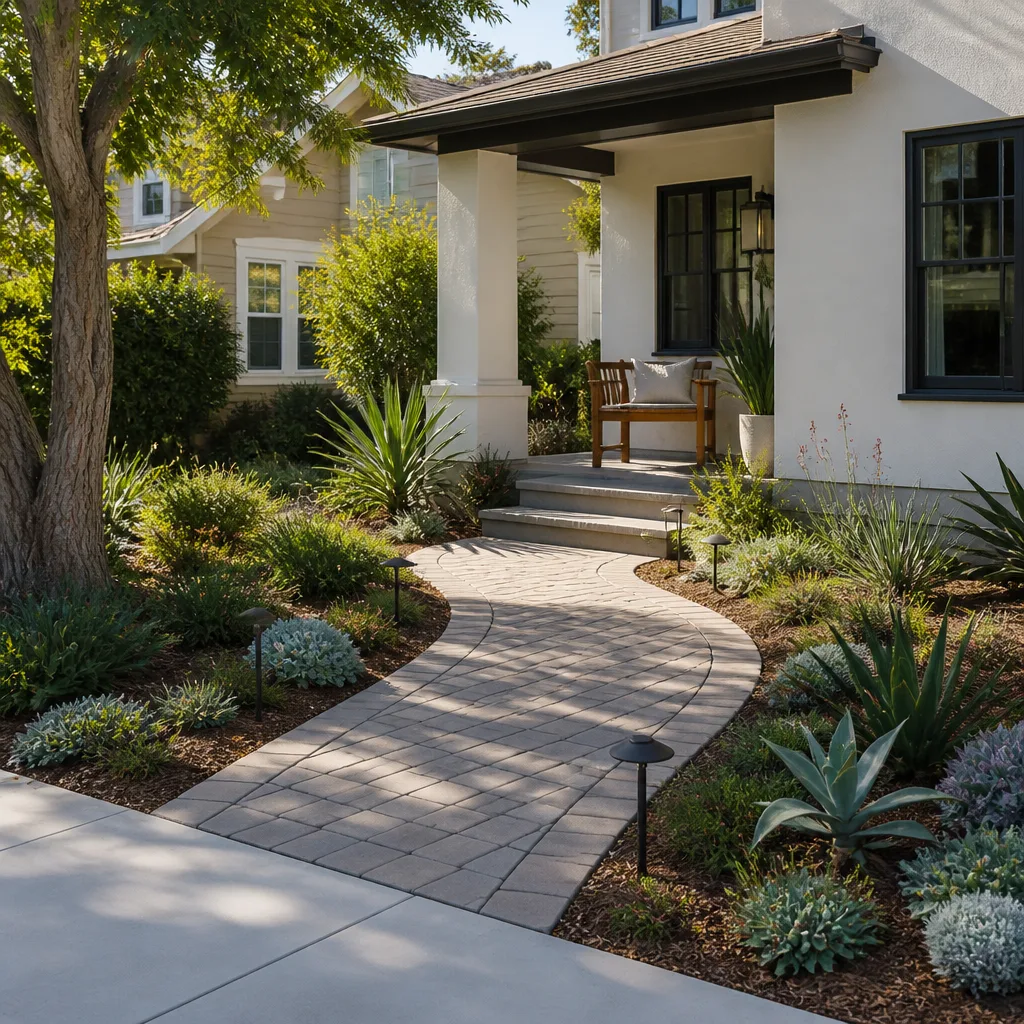
For driveways, patios, and walkways, the brand differences you can actually feel are in the manufacturing method and material composition. Surface-delivered finishes, compression strength, and color-through pigmentation are where cost gets cut on cheap imports, and those are exactly the things East Los Angeles heat and sun exposure expose first.
Belgard, Unilock, Techo-Bloc, Tremron, Cambridge Pavers, and Oldcastle make up the six paver brands we install across this East Los Angeles service area. Within that lineup, the biggest differences come down to three things:
- Manufacturing method. Machine-placed, high-compaction pavers hold their shape and finish much better than imported pavers made with lower compaction. Under a car tire in the summer heat, that difference shows.
- Color-through pigment. Good pavers carry pigment through the entire slab, not just a surface coat. Surface-coated pavers fade in high-UV climates within a few seasons, and a UV-faded driveway is hard to restore.
- Fit and consistency. A higher-quality paver has more consistent dimensions, which means tighter joints and less movement over time. Inconsistent sizes on a poorly made import cause joint failures and settlement.
Generic imported pavers undercut the price because they cut somewhere in that list. Some are perfectly adequate as budget options for low-traffic patios. On a driveway or a long walkway exposed to sun and traffic, the compromise usually shows up faster than the homeowner expects. The trick to comparing is to ask for the compression strength and the pigment method, then compare those directly rather than comparing logos. We get into more detail on installation methods and base preparation in our driveway and paver work.
Fencing Materials in East Los Angeles: Vinyl, Aluminum, or Wood
Fencing is where you need to think about all three of East Los Angeles’ microclimate factors at once. A fence here is exposed to significant UV year-round, the soil under many residential lots gets consistent watering from irrigation, and soil chemistry varies block by block depending on how the site has been graded or filled. Brand name matters far less than picking the right material for those conditions.
Here’s how the main materials behave:
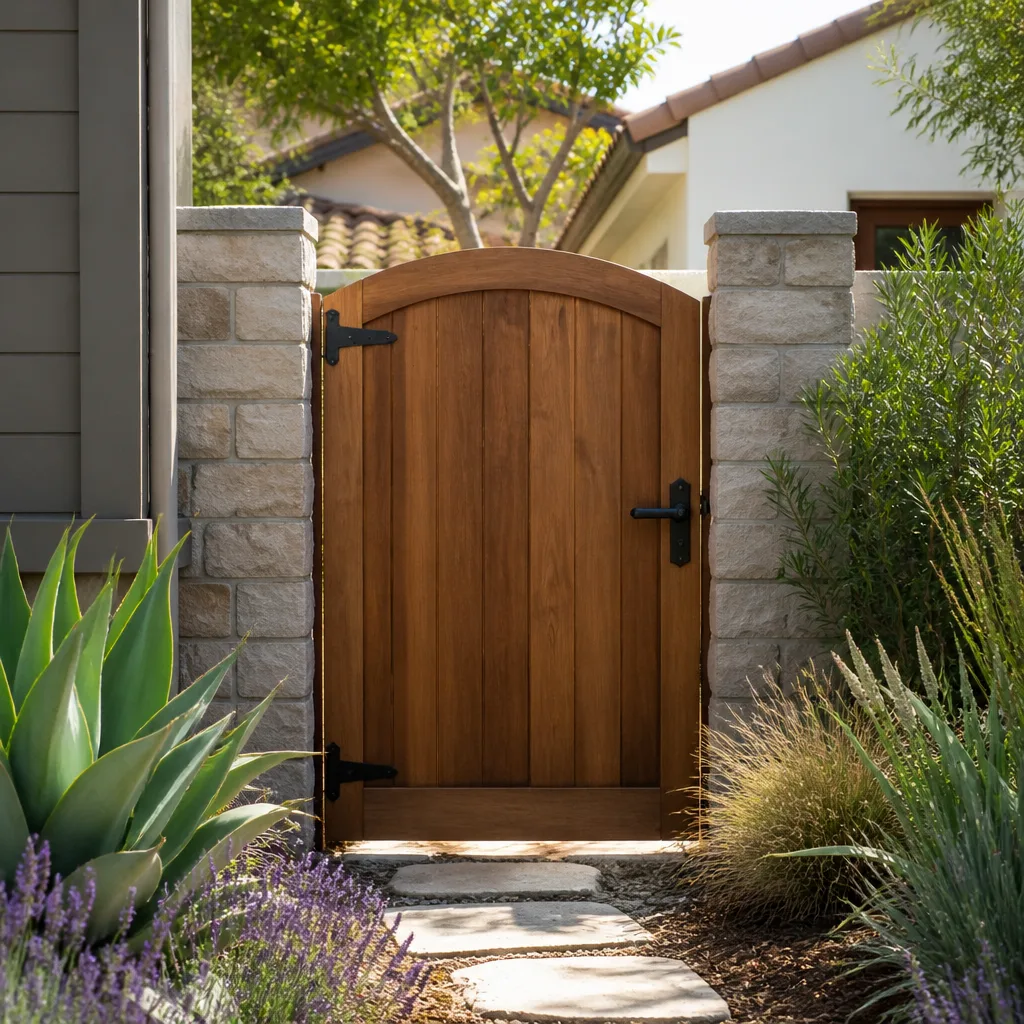
- Vinyl fencing: Strong against UV and moisture, low maintenance, and doesn’t rot. The trade-offs are a premium on the material and less design flexibility. Cheap vinyl that’s thin can crack and yellow over time, so look at wall thickness and the manufacturer’s UV stabilization claim.
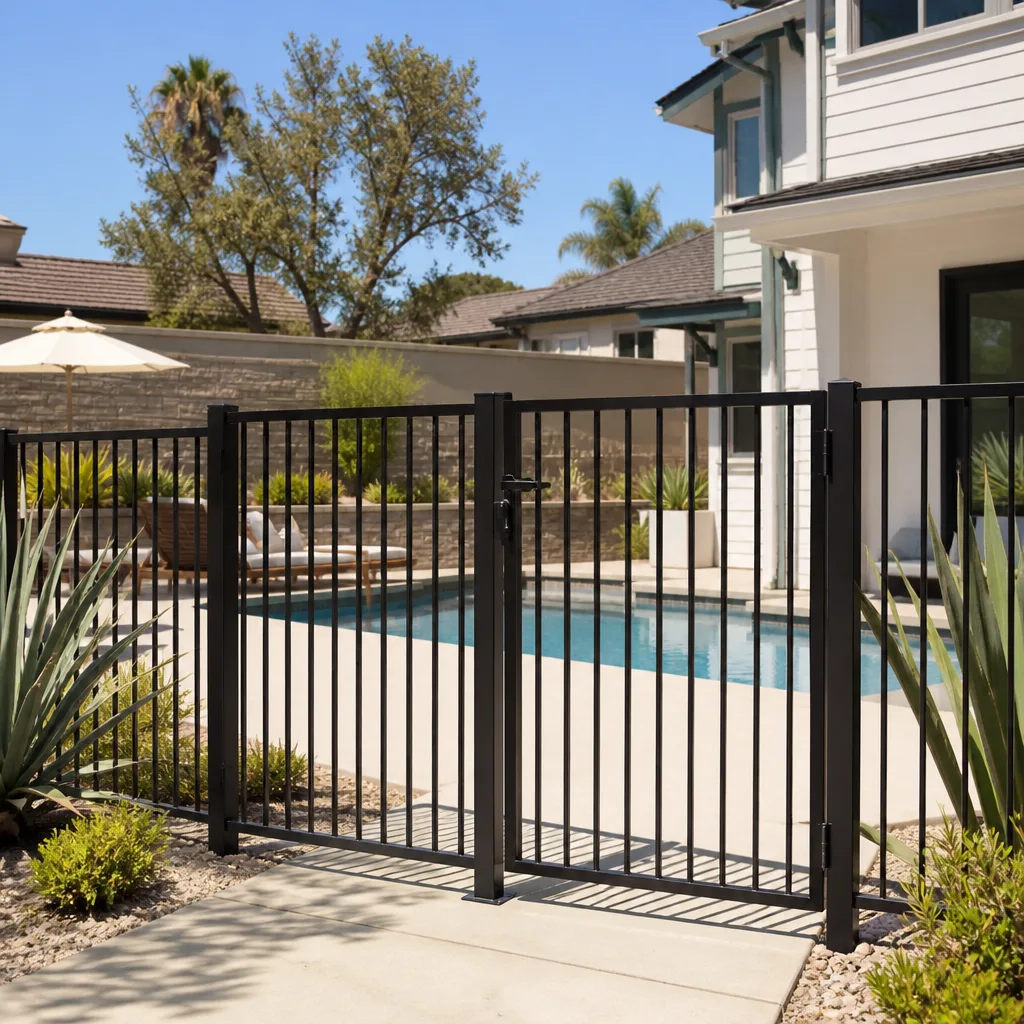
- Powder-coated aluminum: Excellent for East Los Angeles, because the powder coat is a baked-on finish that holds up to UV and doesn’t rust like bare metal. Best used for ornamental and security fencing rather than full privacy. Roofing-style thin aluminum that’s bent cheaply can dent, so check gauge and coating quality.
- Treated wood: The most flexible material and the most traditional look. Real risk in this climate comes from irrigation lines saturating posts and soil chemistry affecting the footing. Proper post footings and correct treatment grade go a long way, but wood still needs periodic care.
When you see brand name plastered on fencing product, ask what the brand controls. Sometimes it’s the extrusion thickness and UV stabilization, which matter. Sometimes it’s just marketing. See how our crew approaches material selection and footing detail on our fence installation page. If you’re fencing the perimeter as part of a larger build, that work should be sequenced with hardscape and any ADU site work so a fence line doesn’t get torn up by a concrete pour.
Kitchen and Bath Fixtures: Where Warranty Terms Beat Brand Name
This is the category where homeowners most often overspend on brand and underspend on specification. The brands you see on the showerhead at the showroom are not always the parts that fail. Two places to be brand-conscious and one place to be spec-conscious:
- Plumbing valves and cartridges (brand matters a lot). Cartridges are the moving part in every faucet and shower valve, and they fail from mineral buildup and wear. A brand with a solid cartridge warranty and a replacement network is genuinely worth the spend. Kohler, Grohe, Moen, Delta, American Standard, Blanco, Toto, and Kohler all sit in our catalog, and comparing them on cartridge warranty is where the decision should start.
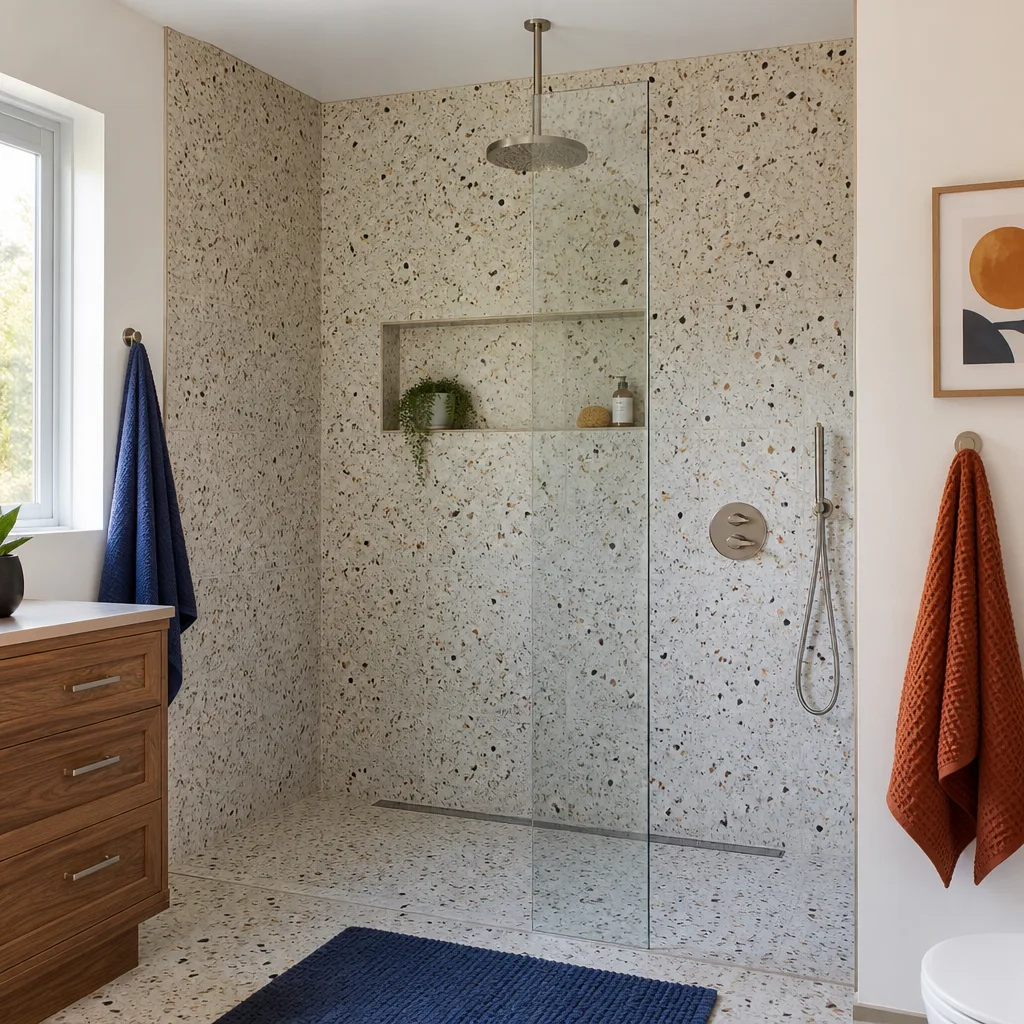
- Waterproofing and tile substrate systems (brand matters). This is the hidden layer behind shower walls and floors. A poor substrate system can fail catastrophically – water finds it, mold follows, and the whole shower comes back out. Ask which waterproofing system and which substrate is being specified, not which tile showroom the design came from.
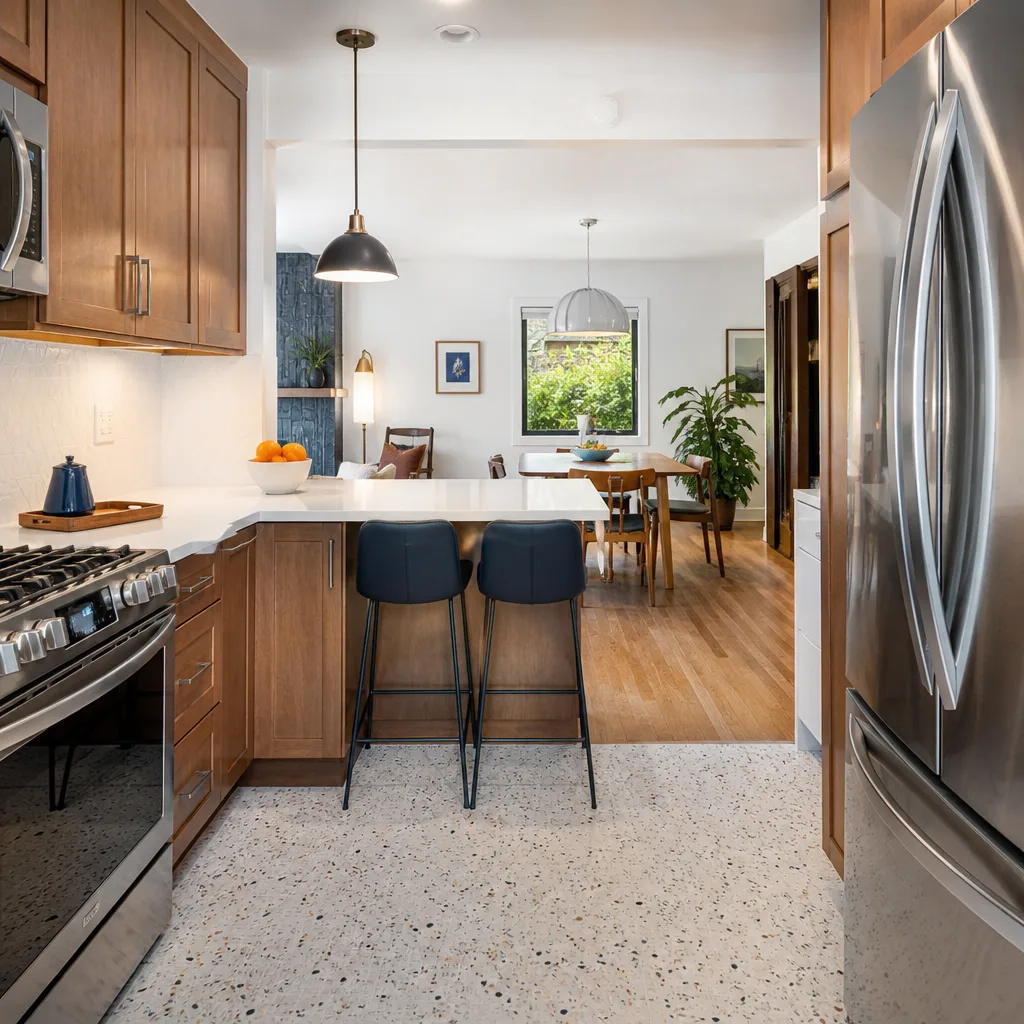
- Countertops and finishes (spec matters more than brand). Cambria, Caesarstone, and Silestone are all quartz surfaces, but they differ in veining pattern, edge options, heat tolerance, and stain resistance. Choose the surface based on how you cook and entertain, then choose the edge and slab. For cabinetry, KraftMaid and Wellborn cover a range of cabinet box constructions, and that construction – full-overlay doors, drawer boxes, hardware, soft-close – is what you’ll actually feel every day.
For dedicated work on a kitchen or bathroom remodel, we build the program around cabinetry, countertops, and a fixture lineup that gives our team real choices for your budget rather than a single spec. That selection process is where the value is, and it’s covered on our kitchen and bathroom service pages.
Prefab and Modular Brands for ADU Projects
ADU brand selection is a different problem entirely. On a site-built addition, “brand” means the material manufacturer. On a prefab or modular ADU, “brand” means the builder of the whole unit, and the brand choice is really a choice about delivery model, finishing level, and how the unit ties into your lot. In our experience as an East Los Angeles construction team, the shortlist homeowners gravitate to for prefab options is Cover, Dvele, Mighty Buildings, and Boxabl, each offering a different balance of speed, finish level, and how much site work remains after the unit lands.
When comparing these, ask the same questions you would ask of a conventional builder:
- What’s included in the base price versus the site work? Foundation, utility trenching, final connection, and landscape repair are almost always extra, and those costs vary a lot block to block in East Los Angeles.
- How much custom finishing is available, or is the unit a fixed design? Fixed designs move fast; customized units take longer but fit awkward lots.
- What’s the permitting pathway? Traditional site-built ADUs run through the city’s permit and inspection process. Prefab units still need site-specific permits and inspections, so the timeline difference is in the construction phase, not the approval phase.
- How does the unit connect to existing plumbing, electrical, and drainage? These tie-ins are where scheduling gaps appear if one contractor owns the shell and a different contractor owns the connections.
Our own approach spans both sides of that line. We work with prefab and modular partnerships including Abodu, Dvele, Boxabl, and Mighty Buildings, and we also build conventional site-built additions when a prefab unit doesn’t fit the lot or the family’s timeline. You can read more about how we scope both options on our home additions & ADU page. The advantage of one team owning the shell and the site is that the finishing and the utility tie-ins are not handed to a stranger mid-project. That’s a real reduction in coordination risk on an ADU build.
How to Vet a Brand Claim Before You Sign
The trick to separating real brand value from brochure copy is a short due-diligence routine. Here’s the one we run through on every material selection:
- Ask for the manufacturer’s product data sheet. Not the marketing flyer. The data sheet lists U-factor, solar heat gain, compression strength, or whatever performance numbers apply to that category. If the vendor can’t produce it, that’s your answer.
- Read the warranty fine print on the specific failure mode. Glass seal failure, frame defect, cartridge failure, tile substrate failure. Warranties are usually a stack of coverages with different terms; read the one that matters to your job.
- Confirm the product is in current production. Off-market, discontinued, or import-only lines can look like name brands while being unserviceable on warranty. Verify the manufacturer still supports the line.
- Check the specification against East Los Angeles conditions. High UV, warm summers, dry winters. A window or a paver or a fence rated for a cooler, wetter climate may not hold up here without the right spec.
- Ask about installation compliance. Almost every brand warranty requires installation to manufacturer specification. If your contractor deviates from that, the warranty doesn’t hold. Ask in writing how the installation will match the manufacturer’s requirements.
When we quote a project, we include the material spec and the warranty line so you can compare quotes apples-to-apples. That’s part of why homeowners often pick a single team to manage multiple phases. Our technicians have up to 8 years of experience, and our work is insured and bonded, but the real driver is the ability to catch these specification issues at the start of the project rather than during a mid-course correction. A free written estimate with line-item specs is the starting point. Call (844) 320-6084 to book one for your East Los Angeles project.
Common Mistakes to Avoid
- Buying the shingle and neglecting the underlayment. On every roof replacement, the underlayment is where most of the real performance difference lives, and it’s the layer most homeowners never ask about. Make it part of the spec sheet.
- Buying windows by brand alone without checking the NFRC rating. East Los Angeles’ solar heat gain matters, and a premium brand name on a clear-glass window wastes that premium.
- Choosing pavers by price per square foot. A cheap paver that fades in a couple of summers costs more over its life than a mid-range paver with color-through pigment and a real compression rating.
- Specifying a shower tile without specifying the waterproofing. A beautiful tile job behind a poor substrate is a guaranteed redo. Ask which substrate and which waterproofing system are being installed, not just which tile.
- Picking a fence material without thinking about irrigation and soil. East Los Angeles lots vary block to block. Post footings that don’t survive a wet irrigation line are a common fence failure.
- Treating the ADU as a product purchase instead of a build. A prefab unit has a fixed shell but site-specific tie-ins, and the cost of those tie-ins is where budgets slip. Get the full scope in writing.
- Signing a quote without a line-item material spec. A quote that says “quality roof” or “premium windows” without a manufacturer, model, and warranty line is a blank check. Ask for the exact spec in writing.
See the difference
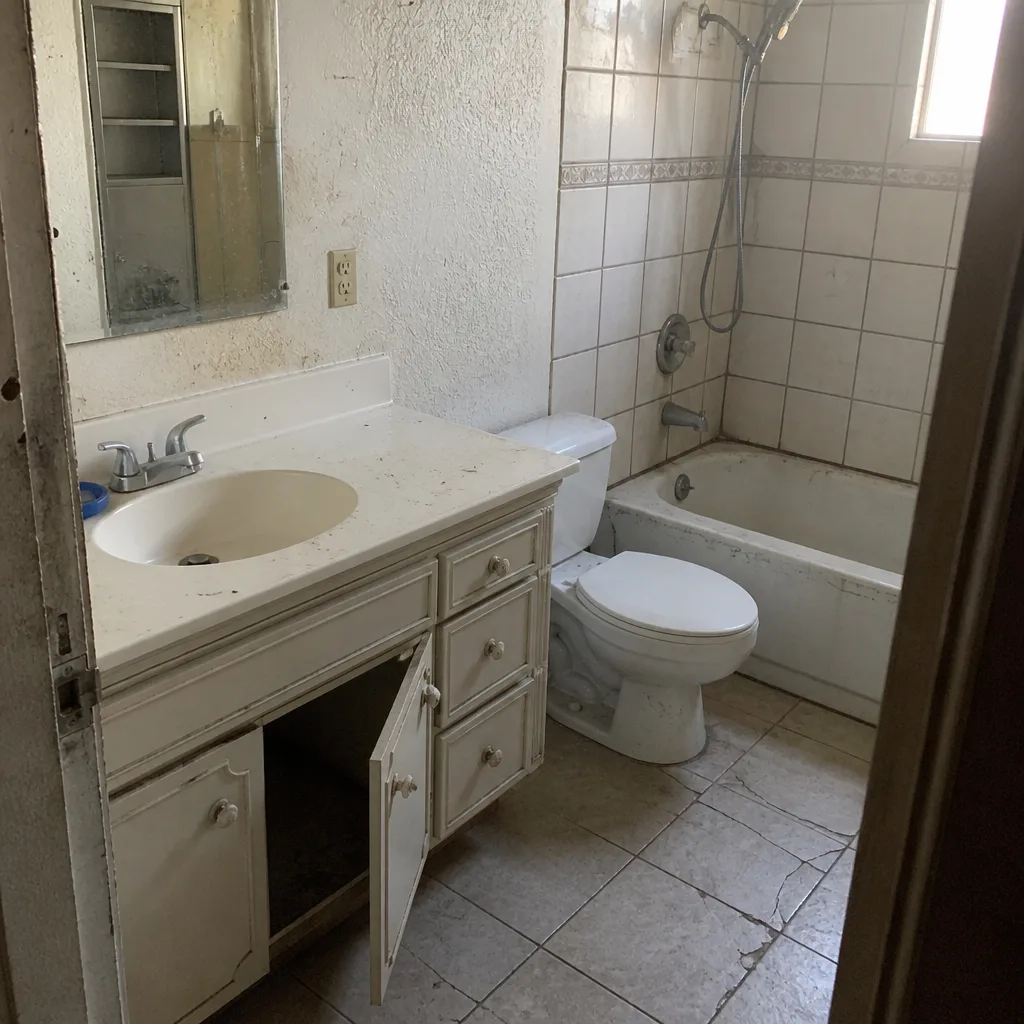 Before
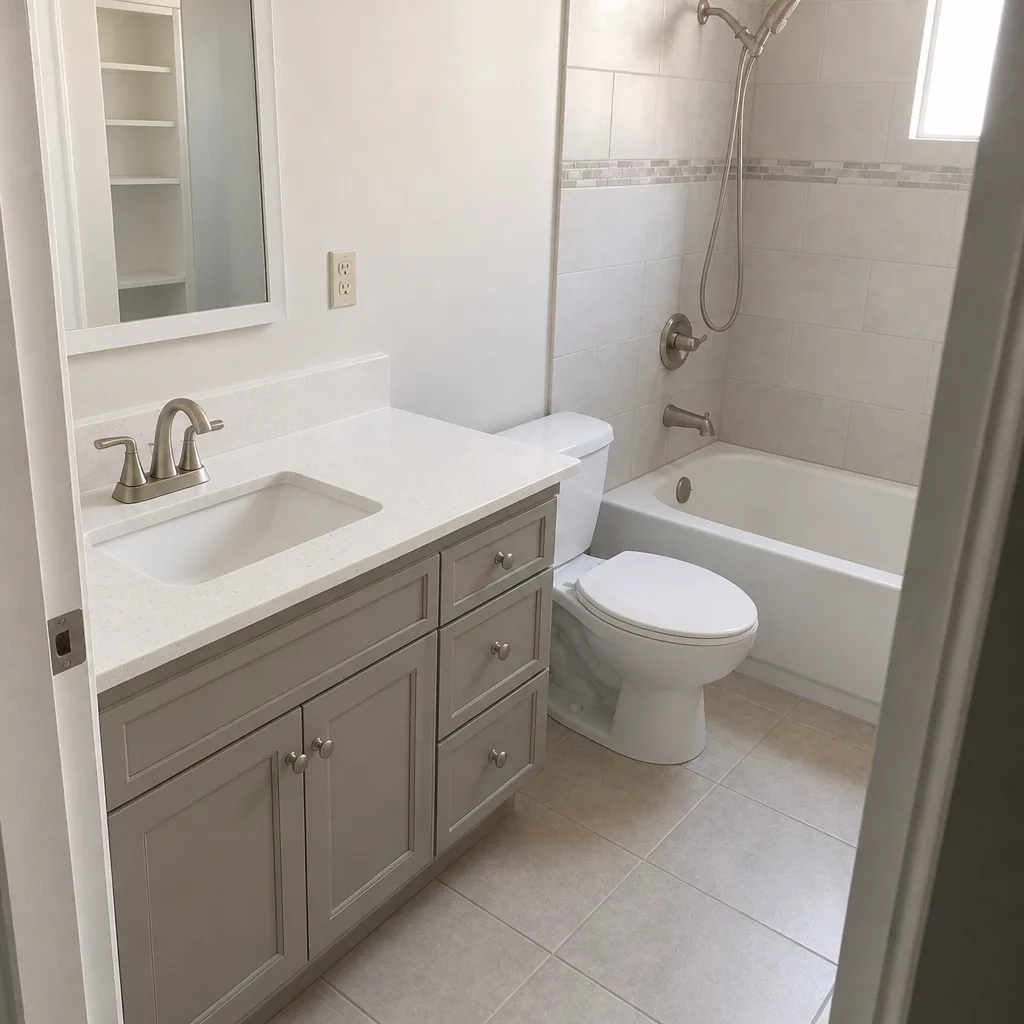 After
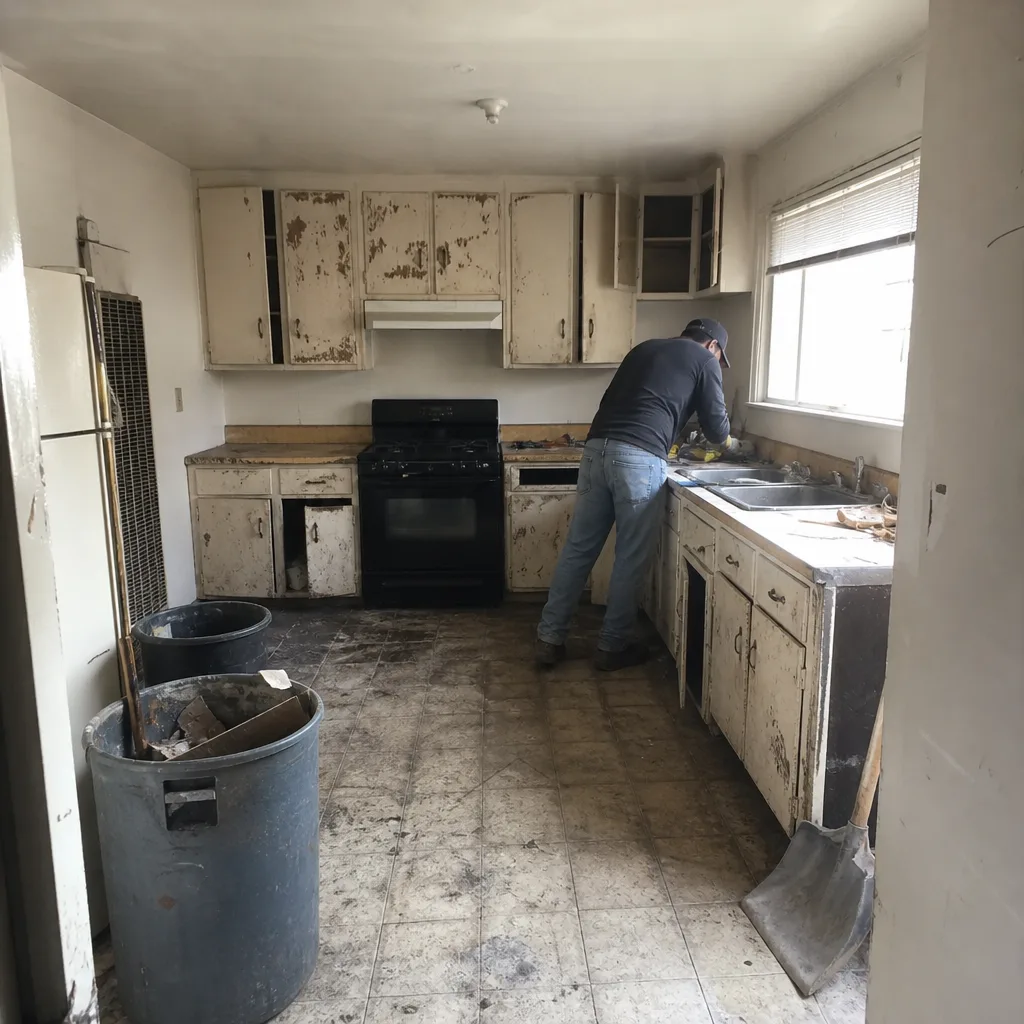 Before
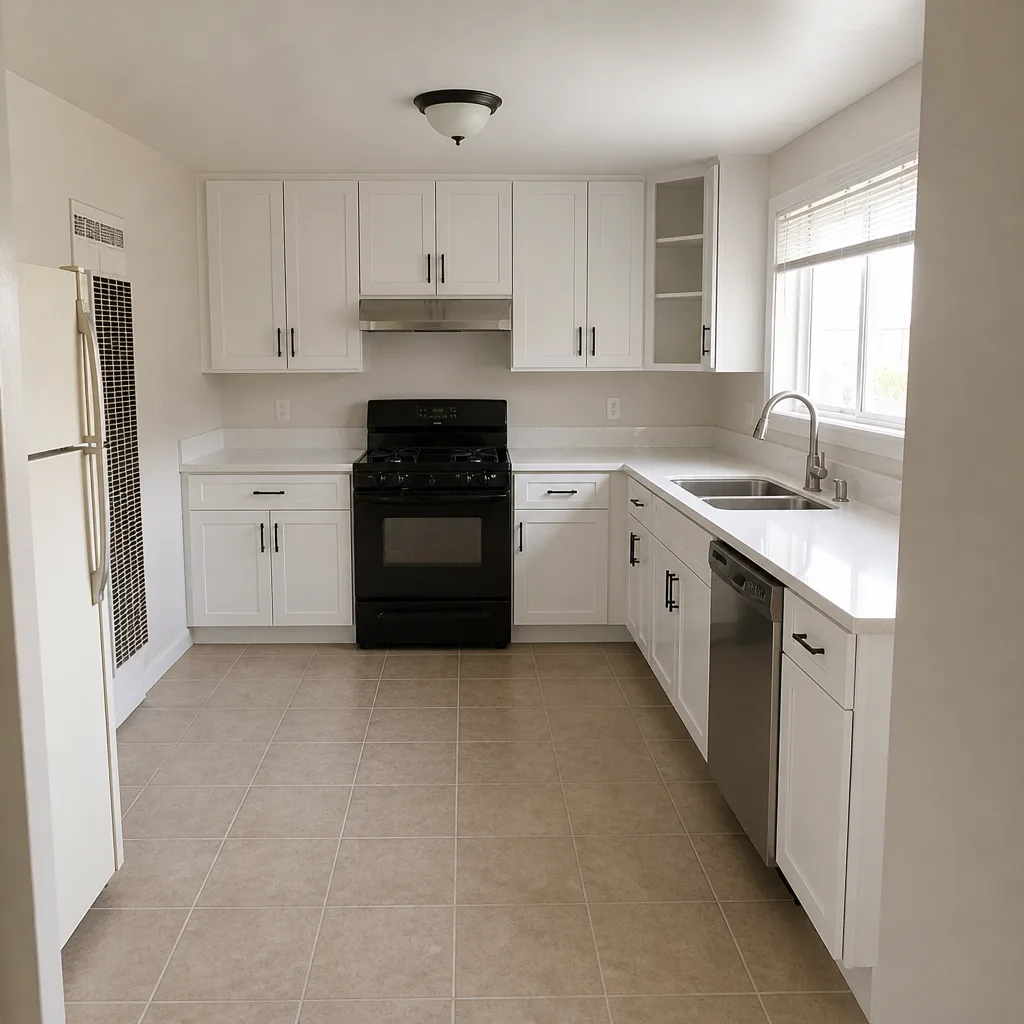 After
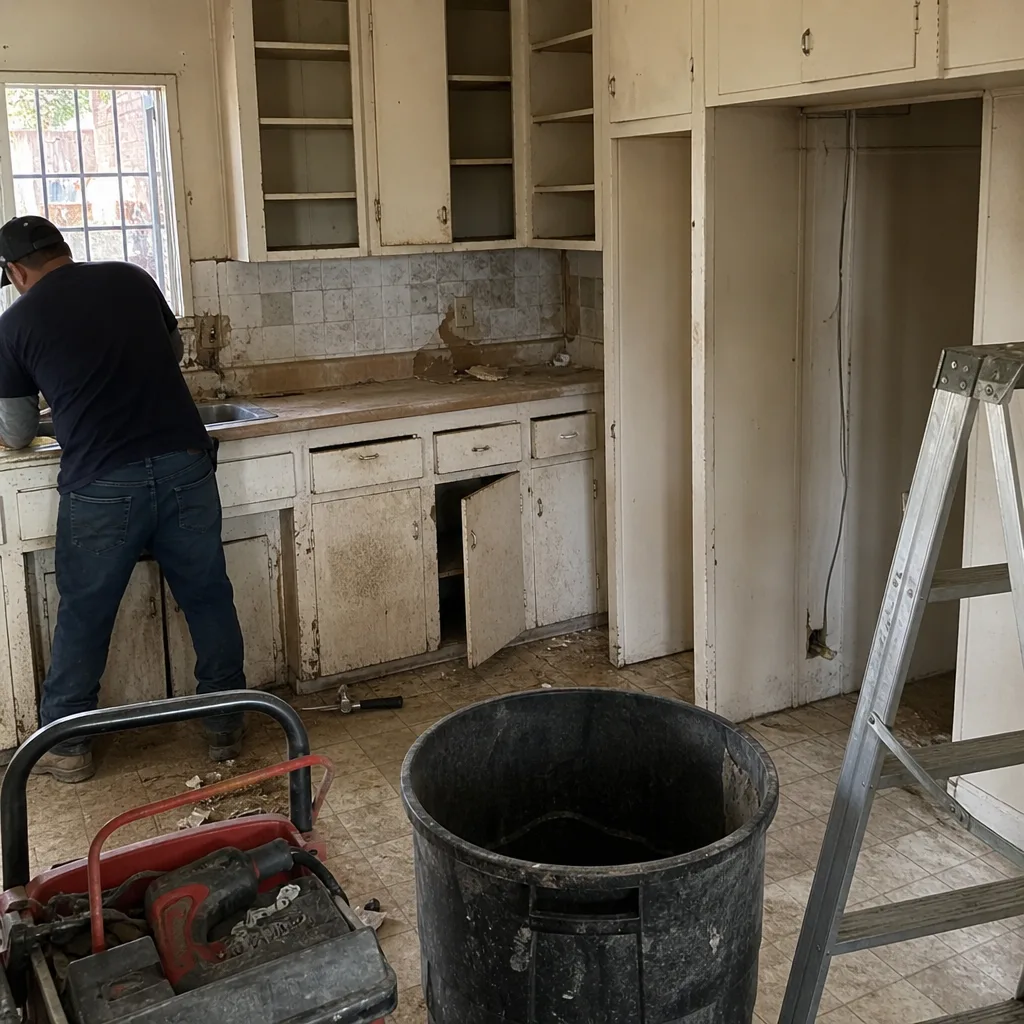 Before
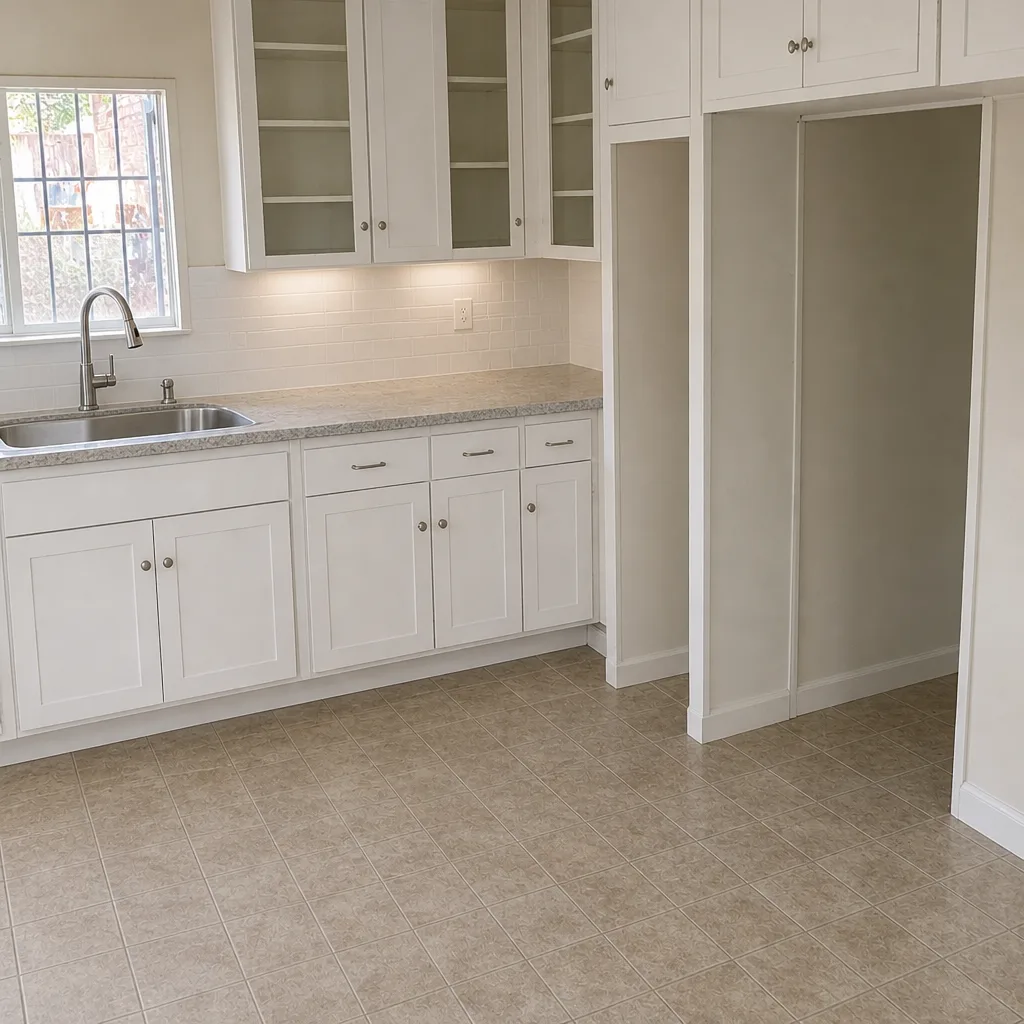 After
When to Call a Professional
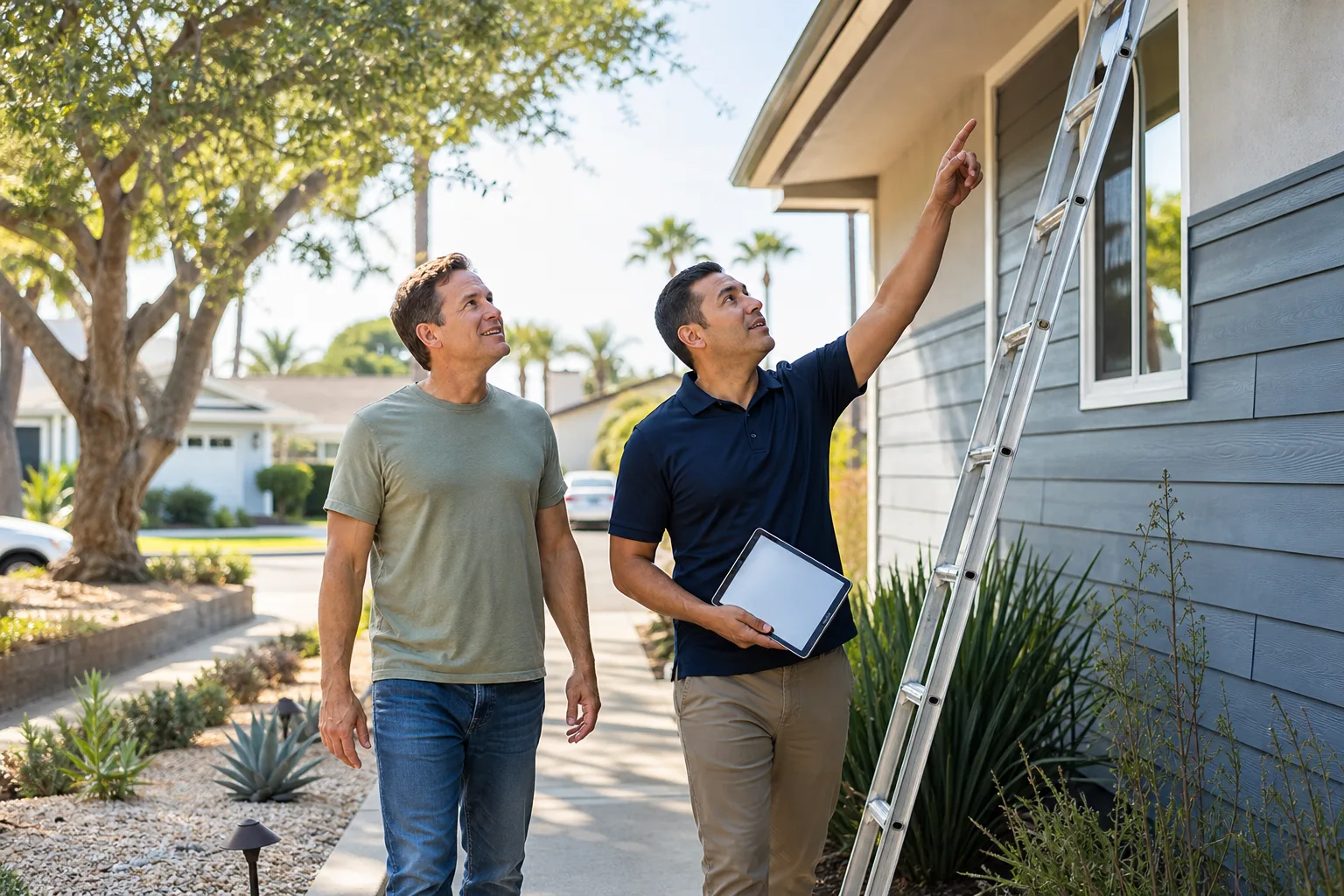
Call a professional when the project involves anything hidden or load-bearing: roofing, windows sized for the opening, fence footings, paver base installation, plumbing fixtures, waterproofing, and ADU site work. Aesthetic decisions like countertops and cabinet hardware are within a homeowner’s reach; structural and system decisions are not. Roofwork in East Los Angeles carries a genuine safety risk – the deck is high, the sun is unforgiving, and unsafe ladder work is a real hazard, not a scare tactic. Water intrusion and soil failure around a fence or paver base follow the same rule. When a mistake is expensive to undo, hire someone trained to do it right. Construction East Los Angeles offers free estimates in East Los Angeles – call (844) 320-6084 to book one and get a written, line-item spec for your project.
Frequently Asked Questions
Roofing underlayment and synthetic shake systems, window glass packages and frames, plumbing cartridges and valves, and tile waterproofing systems are the categories where brand choice most affects performance. Drywall, framing lumber, standard three-tab shingles, and interior paint are essentially commodities in this market. Call (844) 320-6084 for a written spec on your project – estimates are free.
Compare the NFRC label on each quoted window, not the brand name on the frame. Pull the U-factor and solar heat gain coefficient, then check the glass package, the frame material, and the warranty terms for glass seal and frame failure. Ask which orientation each window faces, since Title 24 requirements can differ by location and orientation. Call (844) 320-6084 to walk through the specs with our team – estimates are free.
Belgard, Unilock, Techo-Bloc, Tremron, Cambridge Pavers, and Oldcastle all manufacture pavers to consistent dimensions with color-through pigment, which holds up much better under East Los Angeles’ UV exposure than many imports. Whether the price is worth it depends on the traffic and sun exposure on the surface. A driveway or long walkway benefits most from the higher spec. Call (844) 320-6084 to compare options – estimates are free.
Powder-coated aluminum and quality vinyl both handle East Los Angeles UV and irrigation conditions better than untreated wood, and powder-coated aluminum resists rust without the upkeep of wood. Wood remains the most flexible look. The material matters less than the post footing, so ask how the posts will be set in your soil. Call (844) 320-6084 for a free estimate.
ADUs typically require permits and inspections, and driveways may depending on whether the work changes drainage or the curb. The safe approach is to confirm requirements with your city’s building department before work begins. Our team builds permits and inspections into the scope on the projects we quote. Call (844) 320-6084 for a free estimate that includes the permitting pathway.
Spend on the hidden layers: plumbing cartridges and valves, and the tile waterproofing and substrate systems. Countertop brands like Cambria, Caesarstone, and Silestone are all quality quartz surfaces, but the choice should be driven by heat tolerance, veining pattern, and edge options, and cabinetry choice should be driven by box construction and hardware rather than brand name on the door. Call (844) 320-6084 to walk through the spec – estimates are free.
The Bottom Line
Brand selection in construction is a spec-matching exercise, not a prestige contest. In East Los Angeles, the categories where brand genuinely affects performance are the hidden layers: roofing underlayment, window glass packaging, plumbing cartridges, and tile waterproofing systems. The categories where brand is mostly packaging are standard shingles, drywall, and framing material. Pavers, fencing, and cabinetry sit in the middle, where the material specification drives performance and the label is just shorthand for that spec. Get the specification right, confirm the warranty terms, and coordinate the exterior, windows, fencing, and hardscape as one project so finished work doesn’t get damaged by the next phase.
We handle that coordination as a single team across seven service categories. Our technicians have up to 8 years of experience, our estimates are free and itemized, and we pull the permits and pass the inspections on the projects we build. Call (844) 320-6084. We answer 24/7, with fast dispatch from 7am to 7pm, Sunday through Friday, and we’re closed on Saturday.
Written by the team at Construction East Los Angeles.