Last updated November 18, 2026
Free written scope consultation - allowances, timeline, and change-order rules on paper before a single trade is scheduled
Driveway & Pavers Troubleshooting in East Los Angeles: Common Problems and How to Fix Them
If the same two pavers keep sinking every rainy season, re-setting them without pulling the base is the paver equivalent of patching a leaky roof with tape. You’ll be doing it again next year. Most driveway paver failures in East Los Angeles get diagnosed at the surface, when the real problem sits six inches below it: a base that was never compacted correctly or a site that never had enough slope to shed water in the first place. This guide teaches you to read what a failing driveway is telling you, then decide whether a repair is a small job you can take on yourself or a base rebuild that needs a contractor and a permit. East Los Angeles soils, slopes, and rain patterns each leave their own fingerprint on a failing driveway.
Quick Answer
Sinking, rocking, and cracking pavers in East Los Angeles usually trace back to one of three root causes: clay soil that swells and shrinks with moisture, missing or failed edge restraint, or a base slope too flat to move water off the driveway. Fixing the symptom without correcting the cause means the same section fails again within a season or two. The right repair depends on which cause you’re actually looking at, and a probe-rod test through the joint sand will tell you which one it is.
Styles & brands we work with
- Kitchen remodeling
- Bathroom remodeling
- Home additions & ADU
- Roofing
- Windows & doors
- Driveway & pavers
- Fence
Table of Contents
- The Three Root Causes of Paver Movement in East Los Angeles
- The Probe-Rod Test: Rebuild or Re-Set?
- White Staining and Efflorescence: What It Is and How to Remove It
- Joint Sand Washout After Heavy Rain: Why Polymeric Sand Wins
- DIY Versus Professional: Where the Line Falls
- Permits, the Curb Apron, and City Code
- Choosing Paver Brands for East Los Angeles Conditions
- Preventive Maintenance That Actually Works
The Three Root Causes of Paver Movement in East Los Angeles
When a paver driveway starts to shift, sink, or crack, the visible damage is almost always downstream of one of three conditions. Learning to tell them apart is the single most useful troubleshooting skill a homeowner can develop, because each one calls for a completely different repair.
1. Clay Soil Heave and Settlement
Much of East Los Angeles sits on expansive clay soils. These soils absorb water and swell, then dry out and shrink, and the cycle repeats with every wet season and dry spell. A paver base built over clay without proper depth, compaction, and a separation layer will move with that soil. The visual tell is broad, gradual settlement across a large area rather than one isolated low spot, often with hairline cracks radiating outward from the low point. If your whole driveway edge dips toward the street after a wet winter, clay movement is the likely culprit.
2. Inadequate Edge Restraint
Pavers are held in place laterally by edge restraint: a concrete curb, a plastic edge, or a soldier course pinned and bedded properly. When that restraint is missing, undersized, or has pulled away from the pavement, the outer pavers creep outward and the field behind them loosens. The visual tell is a widening gap at the driveway perimeter, pavers spreading apart near the street or the garage apron, or a curb that has separated from the pavement. This kind of movement is usually concentrated at the edges rather than the middle.
3. Undersized Drainage Slope
A driveway needs a minimum slope to shed water, and that slope needs to direct water somewhere other than back under the pavement. On a flat or reverse-sloped site, water ponds in the joints, softens the base, and gradually pumps the bedding sand out through the joints under tire traffic. The visual tell is standing water after rain, dark wet patches that persist for days, and joint sand that keeps disappearing from the same low area. If your driveway has a section that stays wet long after the rest has dried, slope is the problem.
In our experience, most failing driveways in East Los Angeles show two of these at once. Clay movement opens the joints, water gets in, and the undersized slope keeps it there. That combination is why so many surface-level repairs fail within a year.
The Probe-Rod Test: Rebuild or Re-Set?
Before anyone quotes a repair, a contractor should probe the base to see what’s actually under the pavers. The probe-rod test is simple, and you can do a version of it yourself. It tells you whether a sunken section needs a full base rebuild or a simple re-sand and re-set.
How the Probe-Rod Test Works
- Choose the test spot. Pick the lowest paver in the sunken area, plus one paver at the edge of the good section for comparison.
- Pull the pavers. Lift two or three pavers to expose the bedding sand and the base below.
- Push a stiff rod into the base. A length of rebar or a screwdriver works. Push it straight down with steady pressure.
- Read the resistance. A firm, well-compacted base should resist the rod and feel dense. If the rod sinks easily several inches, the base has lost compaction or is saturated.
- Check the moisture. Pull the rod out and look at it. Wet, muddy base means water is trapped. Dry, crumbly base means the material has broken down.
- Check the bedding layer. Look for bedding sand that has migrated into the base or washed out from under the pavers. A bedding layer thinner than about an inch is a sign the sand has pumped out.
Reading the Results
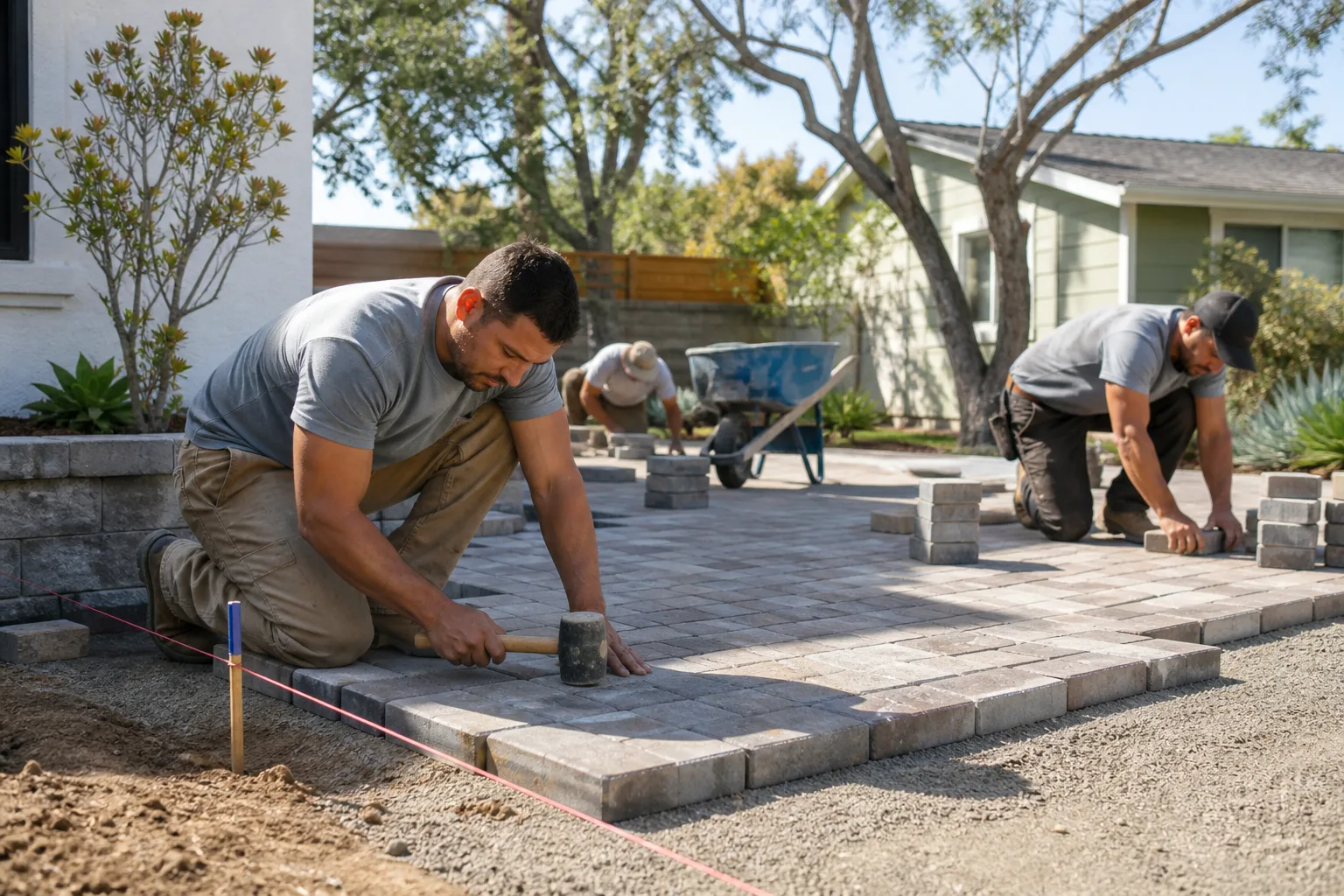
- Firm base, intact bedding: A re-set is likely enough. Lift the affected pavers, top up the bedding sand, re-compact, re-set the pavers, and re-sand the joints with polymeric sand.
- Soft or saturated base in one area: A localized base rebuild is needed. The failed section gets excavated, re-graded, re-compacted, and rebuilt.
- Soft base across the whole driveway or slope problems throughout: A full reconstruction is the only repair that will hold. Re-setting a few pavers on a failing base is money spent twice.
A probe-rod test is the difference between a repair that lasts and a repair that looks fine until the next rainy season. It’s also the first thing our technicians do on any paver call in East Los Angeles before recommending a scope of work.
White Staining and Efflorescence: What It Is and How to Remove It
Efflorescence is a white, powdery or crusty deposit that rises to the surface of concrete pavers. It’s not mold, and it’s not damage. It’s water-soluble salts migrating from the base or the concrete itself, drawn to the surface as moisture evaporates, then left behind as a crystal deposit. Southern California’s alkaline water supply makes it more common here, and concrete pavers are more prone to it than clay or natural stone because of the free lime in the concrete.
What Causes It
- Moisture moving through the paver from the base below
- Alkaline water from irrigation or rain
- Fresh concrete that hasn’t fully cured
- Poor drainage that keeps the pavement wet for extended periods
How to Remove It Without Etching the Surface
Standard soap and water won’t touch efflorescence, and a pressure washer with too much pressure will drive the salts deeper or damage the paver surface. The right product is a dedicated efflorescence remover such as Sure Klean 600 Detergent, which is formulated to dissolve the salts without etching concrete pavers. Dilute it per the manufacturer’s instructions, apply it to a wet surface, work it in with a stiff brush, let it sit briefly, then rinse thoroughly with clean water. Repeat on stubborn deposits. Never use muriatic acid on concrete pavers; it will etch the face and change the color permanently.
If efflorescence keeps coming back in the same spot, it’s a symptom of a moisture problem, not a cleaning problem. Fix the drainage or the base moisture before spending more on cleaners. And if the white staining is accompanied by a chalky texture that won’t rinse away, it may not be efflorescence at all but a different surface condition that needs an on-site look.
Joint Sand Washout After Heavy Rain: Why Polymeric Sand Wins
Joint sand is the layer that locks pavers together, transfers load across the pavement, and keeps water from funneling into the base. When it washes out, the whole system loosens. Standard sand will do the job in a stable, dry climate, but East Los Angeles doesn’t offer that. The rain pattern here is the problem: long dry stretches followed by concentrated rain events, the kind that come with El Niño years, that flood the joints and carry loose sand with them. Then the pavement dries out and the joints sit empty until the next storm.
Why Polymeric Sand Holds Up Better
Polymeric sand like Techniseal HP+ is standard sand mixed with a polymer binder that cures after water activation. Once set, it forms a firmer, more water-resistant plug in the joint than plain sand:
- It resists erosion. The cured binder holds sand in place through heavy rain and runoff.
- It flexes. High-performance blends flex with minor pavement movement rather than cracking out.
- It reduces weed growth. A fully filled, cured joint leaves no room for germination.
- It handles the wet-dry cycle. It’s built for pavements that get soaked and then baked, which is the East Los Angeles pattern.
How to Apply It Correctly
- Clean the joints completely. Old sand, dirt, and weeds have to come out first.
- Make sure the pavement and joints are dry before application.
- Sweep the polymeric sand into the joints, filling them to within about 1/8 inch of the surface.
- Compact the surface with a plate compactor to work sand into the joint.
- Sweep off all excess sand from the paver faces.
- Activate with a light, even mist of water per the product instructions and let it cure.
Applied correctly, polymeric sand gives you several seasons of solid performance. Applied on a wet surface or with excess sand left on the paver faces, it can haze the pavement and fail early, which is why the preparation steps matter as much as the product.
DIY Versus Professional: Where the Line Falls
Some paver repairs are genuinely within reach for a careful homeowner, and some are not. Knowing which is which saves you both money and a second repair.
Reasonable DIY Repairs
- Re-sanding joints with polymeric sand after a washout, if the base is firm
- Cleaning efflorescence with a dedicated remover
- Re-setting a single rocking paver if the probe test shows a firm base and bedding underneath
- Removing weeds and cleaning the pavement surface
When It’s Time to Call a Professional
- Any area where the probe test shows a soft or saturated base
- Pavers spreading at the edges, which points to failed edge restraint
- Standing water or reverse slope across a section of the driveway
- Cracking that radiates across several pavers, which points to base movement
- Anything that requires excavating the base, re-grading, or rebuilding the apron at the street
If the base is firm and the trouble is confined to the surface, re-sanding joints and re-setting a few pavers is a manageable project you can take on yourself. Once excavation, re-compaction, or new edge restraint is involved, the tools and the compaction equipment are the deciding factor. A plate compactor rented for one job rarely does what a properly staged base rebuild does, and a base that isn’t compacted in lifts will settle again.
One caution: never try to fix a rocker by simply adding sand under one corner. That lifts the paver off its bedding and creates a pivot point. The paver will rock worse within a few weeks.
Permits, the Curb Apron, and City Code
Most repairs to the paver surface inside your property line don’t require a permit. The line moves when the work touches the apron, where the driveway meets the city curb and the public right-of-way. That connection is regulated by the city, and rebuilding or altering it typically requires a permit and an inspection. East Los Angeles driveways that run to the street often have an apron section that has settled or cracked, and that section is exactly where homeowners get into trouble by rebuilding without checking.
When You’ll Likely Need a Permit
- Replacing or altering the driveway apron at the curb
- Changing the width or location of a driveway cut in the curb
- Any work that affects the public sidewalk or right-of-way
When You Usually Won’t
- Re-sanding joints
- Re-setting individual pavers inside the property line
- Cleaning and sealing the pavement
- Repairing edge restraint that stays on private property
Before any apron work, ask your city’s building or public works department what’s required. The rules vary by jurisdiction and by street, and pulling a permit is cheaper than rebuilding an apron that fails inspection. When we scope a driveway & pavers project, permit requirements get sorted before any material is ordered, not after the demolition starts.
Choosing Paver Brands for East Los Angeles Conditions
The paver you choose matters less than the base under it, but it’s not irrelevant. Concrete pavers from established manufacturers run a tighter dimensional tolerance, hold their joint spacing, and resist freeze-thaw and moisture cycling better than bargain material. For most East Los Angeles driveways, we work from a shortlist of major paver brands:
- Belgard for a broad range of dimensional styles and colors
- Unilock for structural-strength pavers rated for vehicular traffic
- Techo-Bloc for design-forward profiles and textures
- Tremron for cost-effective concrete pavers with good durability
- Cambridge Pavers for classic and modern profiles
- Oldcastle for durable concrete paver options
Every paver on that list is only as good as its installation. A premium paver set on a shallow, poorly compacted base will fail. A mid-grade paver on a correctly built base will outlast it. That’s why we start every driveway project with the base design, not the paver catalog.
Preventive Maintenance That Actually Works
Most paver failures are preventable with a few routine habits. None of it is expensive, and all of it extends the life of the pavement.
- Inspect the joints after every rainy season. Walk the driveway and look for joints where the sand has dropped. Refill with polymeric sand before the next storm.
- Check the edges. Look for gaps between the pavement and the edge restraint. A gap that’s growing is edge failure in progress.
- Watch for standing water. If water sits on the pavement for more than a few hours after rain, drainage needs attention.
- Keep irrigation off the pavement. A sprinkler head aimed at the driveway softens the base and feeds efflorescence.
- Don’t park heavy equipment on it. Point loads on pavers with weakened joints can start a new rocker.
- Treat efflorescence early. The longer the salts sit, the harder they are to remove without etching.
Common Mistakes to Avoid
- Re-setting pavers without testing the base. The sunken paver is a symptom, not the problem. Pull it, probe the base, and decide from what you find.
- Adding sand under a rocker. It feels like a fix and fails within weeks. The paver needs a properly bedded base, not a shim.
- Using muriatic acid on efflorescence. It etches the surface and changes the paver color permanently. Use a dedicated efflorescence remover such as Sure Klean 600 Detergent.
- Skipping the edge restraint check. Pavers spreading at the perimeter won’t stay put just because the field looks flat. Edge restraint has to be rebuilt before re-sanding.
- Filling joints with plain sand in a rainy season. Standard sand will wash out again the next rain. Polymeric sand like Techniseal HP+ is the right material for East Los Angeles rain cycles.
- Ignoring a standing-water section. Water pooling on the pavement is a slope problem, and no amount of sand or cleaning solves it. It needs a drainage correction.
- Rebuilding the curb apron without a permit. The apron at the city curb is regulated. Getting the permit first is cheaper than fixing it after.
- Matching paver color and ignoring structural rating. A paver rated for foot traffic isn’t a driveway paver, no matter how good it looks. Confirm the rating for vehicular use.
See the difference
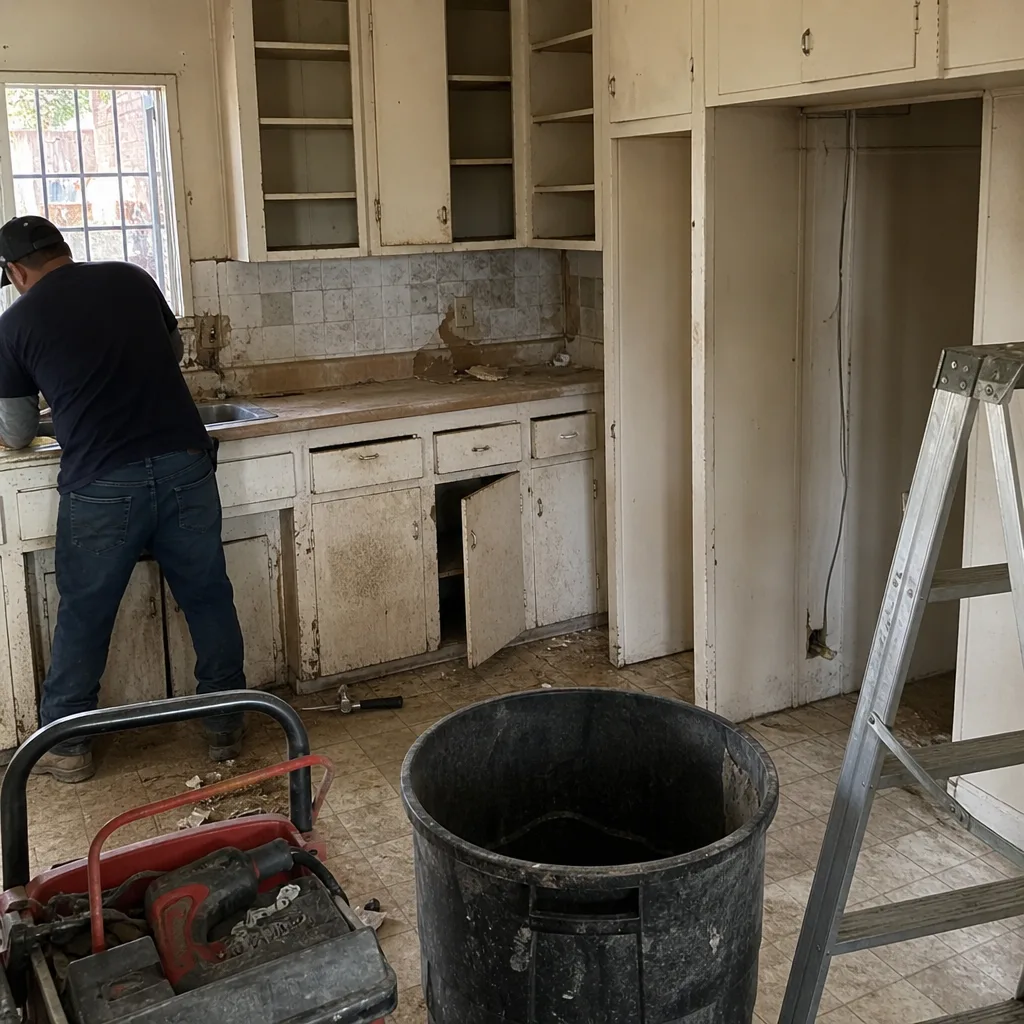
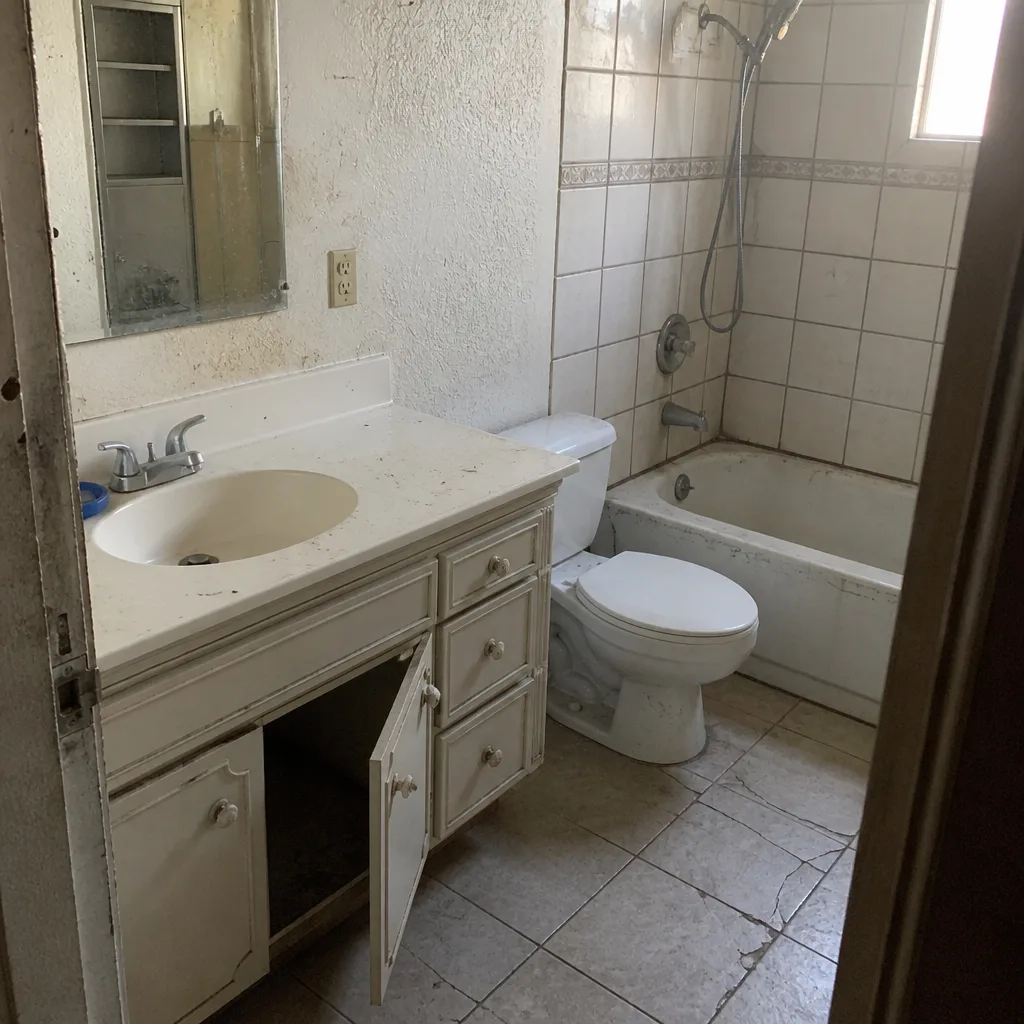 Before
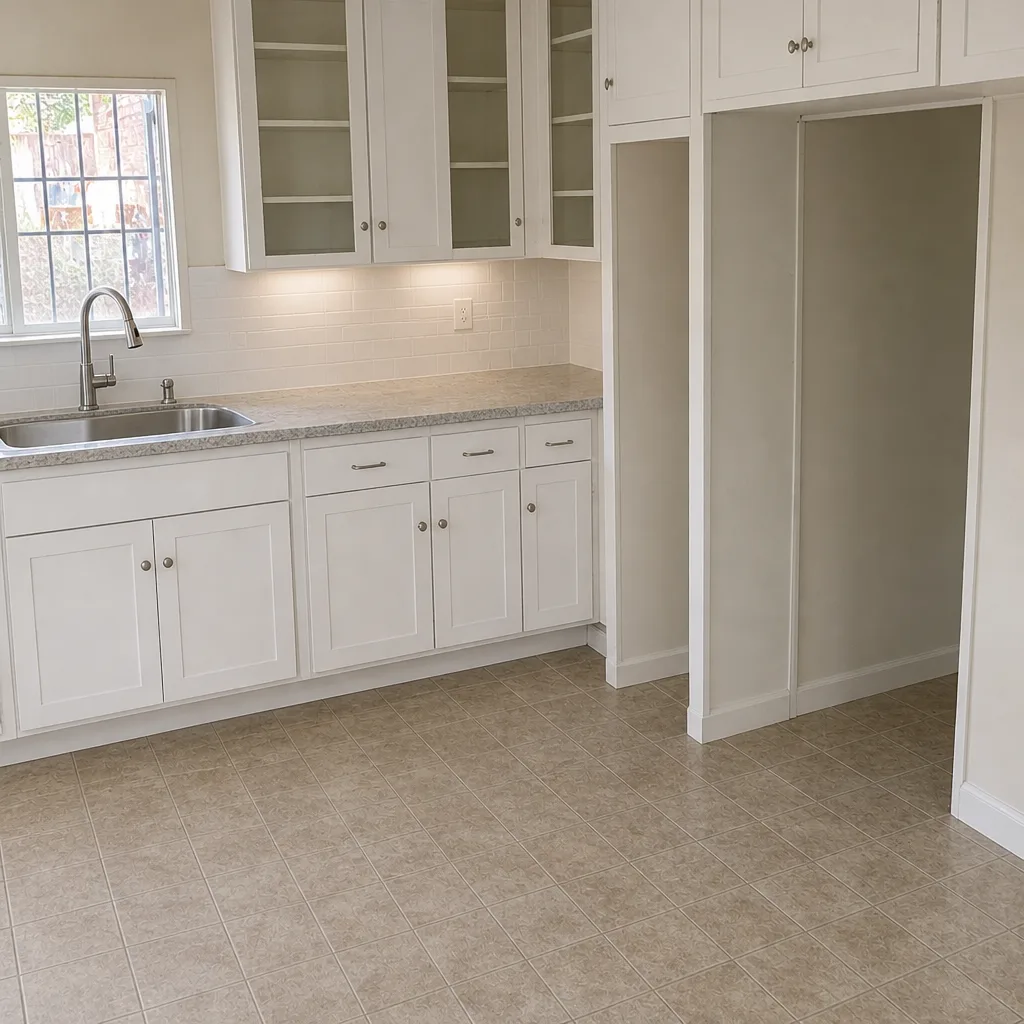
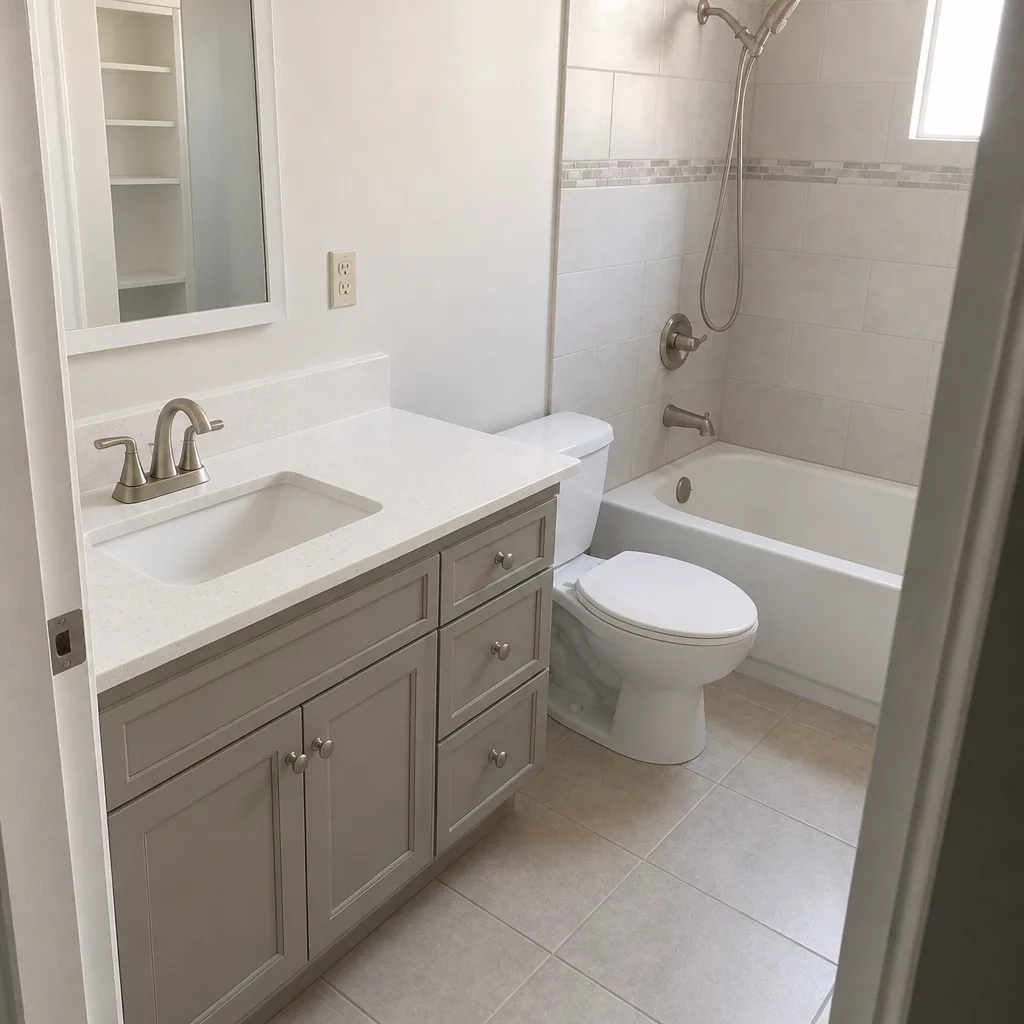 After
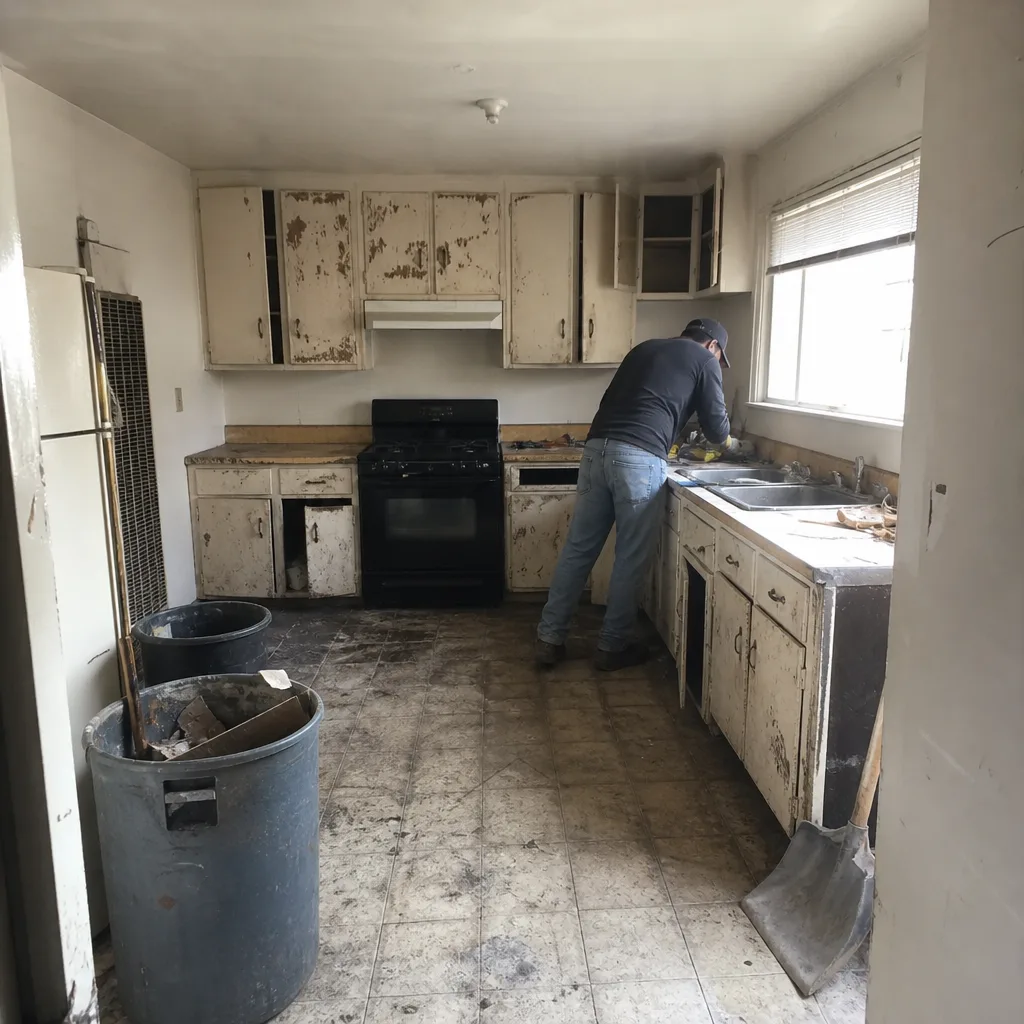 Before
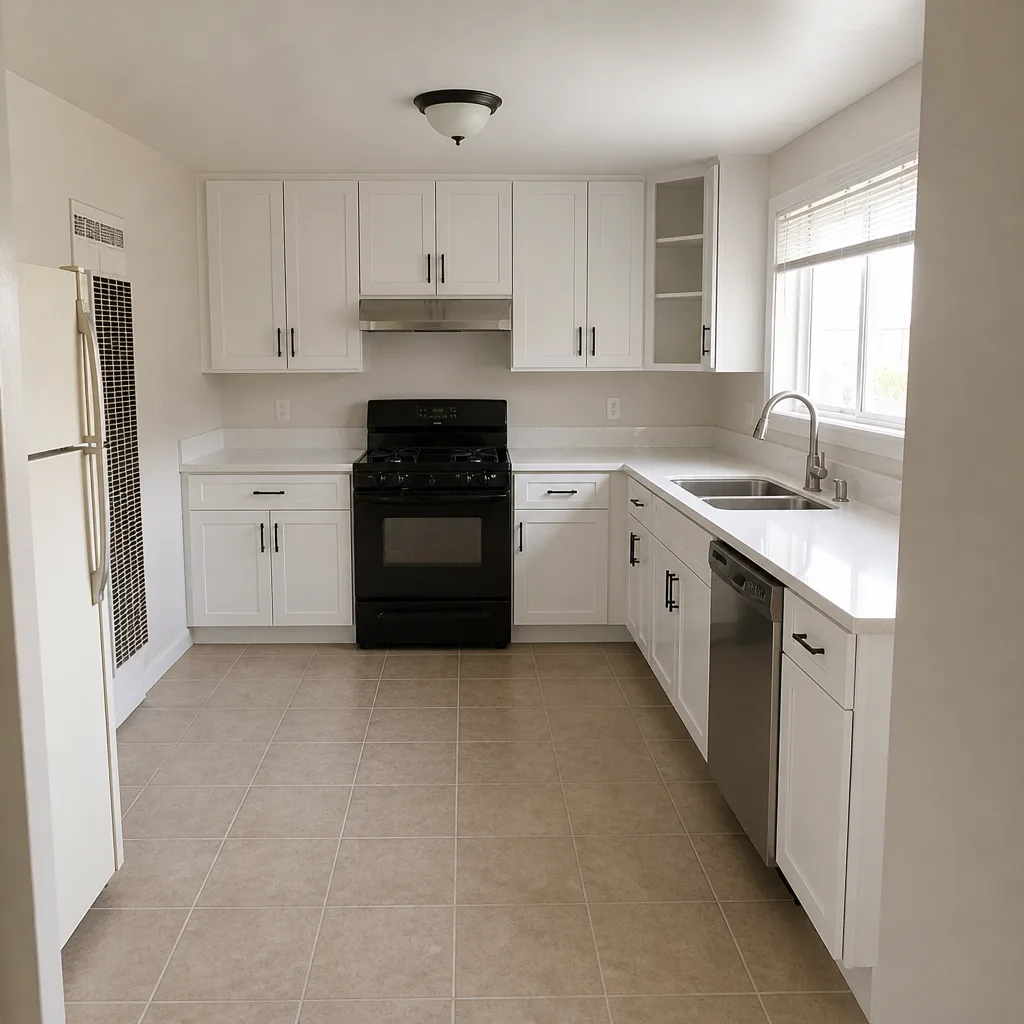 After
 Before
 After
When to Call a Professional
Call a professional when the probe test shows a soft base, when pavers are spreading at the edges, when water pools on a section of the driveway after rain, when cracks run through multiple pavers, or when the apron at the city curb needs work. Any of those signals means the repair involves excavation, re-compaction, re-grading, or a permit, and none of them are reliably fixed from the surface. Surface-only repairs on a failing base just relocate the problem to next year. Construction East Los Angeles offers free estimates in East Los Angeles. Our technicians have up to 8 years of experience, we work from six major paver brands including Belgard and Unilock, and the written estimate sets the price before any work begins. Call (844) 320-6084 to schedule yours.
Frequently Asked Questions
A simple re-sand and re-set of a few pavers is typically a small repair priced by the job, while a localized base rebuild and a full driveway reconstruction cost substantially more because of excavation, compaction, and new material. The written estimate from the contractor sets the final price, and a probe-rod inspection is the only reliable way to know which scope your driveway actually needs. Call (844) 320-6084 for an exact quote; estimates are free.
A paver that sinks repeatedly is sitting on a base that loses compaction or has no drainage, and re-setting the paver without fixing the base is why it happens again. Clay soil movement, an undersized slope, and a saturated bedding layer are the three usual causes in East Los Angeles. Probe the base before any repair. Call (844) 320-6084 for an inspection and a written estimate.
Re-sanding fixes joint washout only if the base underneath is still firm and the edges are holding. If the pavers are rocking, spreading, or sinking, re-sanding hides the symptom for a few months and the problem comes back. Probe first, then decide. Call (844) 320-6084 if you want a professional read on it; estimates are free.
That’s efflorescence, a salt deposit drawn to the surface by moisture, and Southern California’s alkaline water makes it more common here. Remove it with a dedicated efflorescence remover such as Sure Klean 600 Detergent, never muriatic acid, and fix the moisture source if it keeps returning. Call (844) 320-6084 if the staining is widespread or keeps coming back.
Repairs inside your property line usually don’t need a permit, but anything touching the driveway apron at the city curb generally does. That includes rebuilding the apron, changing the driveway width, or altering the curb cut. Confirm with your city’s building or public works department before work starts. Call (844) 320-6084 and we’ll walk you through the permit questions during the free estimate.
We’re closed Saturday. We’re open Sunday through Friday, 7am to 7pm, and we answer the phone 24/7. Call (844) 320-6084 to book a free estimate.
The probe-rod test through the base is the deciding factor: a firm base means re-set, and a soft, wet, or shallow base means rebuild. Cracks through multiple pavers, spreading edges, and standing water all point toward a rebuild. Call (844) 320-6084 for a professional probe and a written scope.
The Bottom Line
Paver troubleshooting in East Los Angeles comes down to reading the symptom correctly. Sunken pavers, spreading edges, and standing water each point to a different root cause: clay soil movement, failed edge restraint, or undersized drainage slope. Fix the cause and the repair lasts; fix the surface and you’ll be back out there next rainy season. Probe the base before you spend a dollar, use polymeric sand like Techniseal HP+ for joints, treat efflorescence with the right product, and pull a permit before touching the apron at the city curb. The rest is routine maintenance.
If you’ve read through this and you’re still not sure which repair you’re looking at, that’s the moment to get an experienced eye on the base. Construction East Los Angeles builds driveways and pavers as part of a coordinated exterior scope that also covers fence installation, roofing, and windows, so the sequencing is planned instead of managed piecemeal. For homeowners whose project is growing into a larger plan, our home additions & ADU work and the broader Construction East Los Angeles service range keep the whole job under one contractor relationship. We answer 24/7, dispatch from 7am to 7pm Sunday through Friday, and we’re closed Saturday. The estimate is free and the written quote sets the price. Call (844) 320-6084 to get started.
Written by the team at Construction East Los Angeles.