Last updated November 18, 2026




Free written scope consultation - allowances, timeline, and change-order rules on paper before a single trade is scheduled
Construction Warning Signs: An East Los Angeles Homeowner’s Reference Guide
A hairline stucco crack running diagonally from a window corner is not a cosmetic issue. It’s a classic indicator of cripple wall racking – the same failure mode that caused widespread structural damage to East Los Angeles homes in the 1987 Whittier Narrows earthquake. Most warning-sign guides focus on dramatic failures: the ceiling that’s already sagging, the fence that’s already down. The signs that matter in East Los Angeles’s aging housing stock are subtler, system-specific, and almost always visible six to eighteen months before the expensive failure they predict. This guide teaches you to read those patterns.
Quick Answer
The most reliable construction warning signs in East Los Angeles are settled patterns, not isolated defects: a set of diagonal stucco cracks that repeat at window corners, roof granules collecting in the same gutter valley season after season, or a driveway edge that has risen above the adjacent sidewalk by a visible lip. When a defect repeats across a system, or appears with a consistent shape and direction, it’s telling you the underlying structure has moved, settled, or lost support. That’s the six-to-eighteen-month warning window before a repair becomes a replacement.
Styles & brands we work with
- Kitchen remodeling
- Bathroom remodeling
- Home additions & ADU
- Roofing
- Windows & doors
- Driveway & pavers
- Fence
Table of Contents
- Reading Stucco Cracks: Shrinkage vs. Settlement vs. Seismic
- Roof Warning Signs Specific to East Los Angeles’s 3-Tab and Low-Slope Stock
- Flatwork Signals: When Driveway Damage Means Base Failure
- Window Frame Warnings in East Los Angeles’s Aluminum Stock
- Fence Warnings: Repair Now or Replace Soon
- The Six-Month Exterior Walkthrough
- What to Do When You Spot a Warning Sign
Reading Stucco Cracks: Shrinkage vs. Settlement vs. Seismic
Stucco is the skin on nearly every older home in East Los Angeles, and every crack you find in it belongs to one of three categories. Knowing which one you’re looking at tells you whether the issue is cosmetic, active structural movement, or a record of past seismic damage.
1. Shrinkage cracks (map-cracking). These are the fine, shallow, interconnected web of lines you see on a large stucco wall with no clear orientation. They’re a normal part of the material curing and aging. They rarely need more than patching and repainting. If the cracks are uniformly fine and don’t follow edges, corners, or seams, they aren’t structural.
2. Settlement cracks. These show up as diagonal lines running outward from the corners of windows and doors, typically at roughly 45 degrees. A settlement crack is the stucco reacting to a load it wasn’t designed to carry – the framing or the foundation under the corner of the opening moving independently of the stucco above it. A single diagonal crack is worth watching. Two or more on the same wall, all radiating from different openings, is a pattern that says the wall’s structural framing is moving as a unit.
3. Seismic movement cracks. These are the tell in East Los Angeles. Look for a crack whose width is consistent as it travels through the wall plane – a crack that goes from window corner to slab edge at the same width reads as sheer movement. If a diagonal crack suddenly narrows or widens, or spiders out into a web, it’s more likely settlement. If a crack’s width stays the same, add a tape measurement across the crack now and again in 60 days.
The cripple wall pattern – a diagonal crack at a window corner combined with a hairline horizontal crack along the base of the stucco near the sill plate – is the specific combination that indicated racking in hundreds of East Los Angeles homes after 1987. If you see that combination, have it looked at by someone who can tell the difference. Hairline cracks aren’t always structural; pattern cracks almost always are. Repairs that involve opening the stucco and evaluating framing are beyond a cosmetic patch, and getting a real read is worth far more than repainting over it.
Roof Warning Signs Specific to East Los Angeles’s 3-Tab and Low-Slope Built-Up Stock
The roofs of most East Los Angeles homes built between the 1950s and 1980s are one of two types: 3-tab asphalt shingle on pitched slopes, or a low-slope built-up roof on the flat or near-flat sections over additions and garages. Each has its own set of warning signs, and general “look for missing shingles” advice misses them.
For 3-tab shingle roofs:
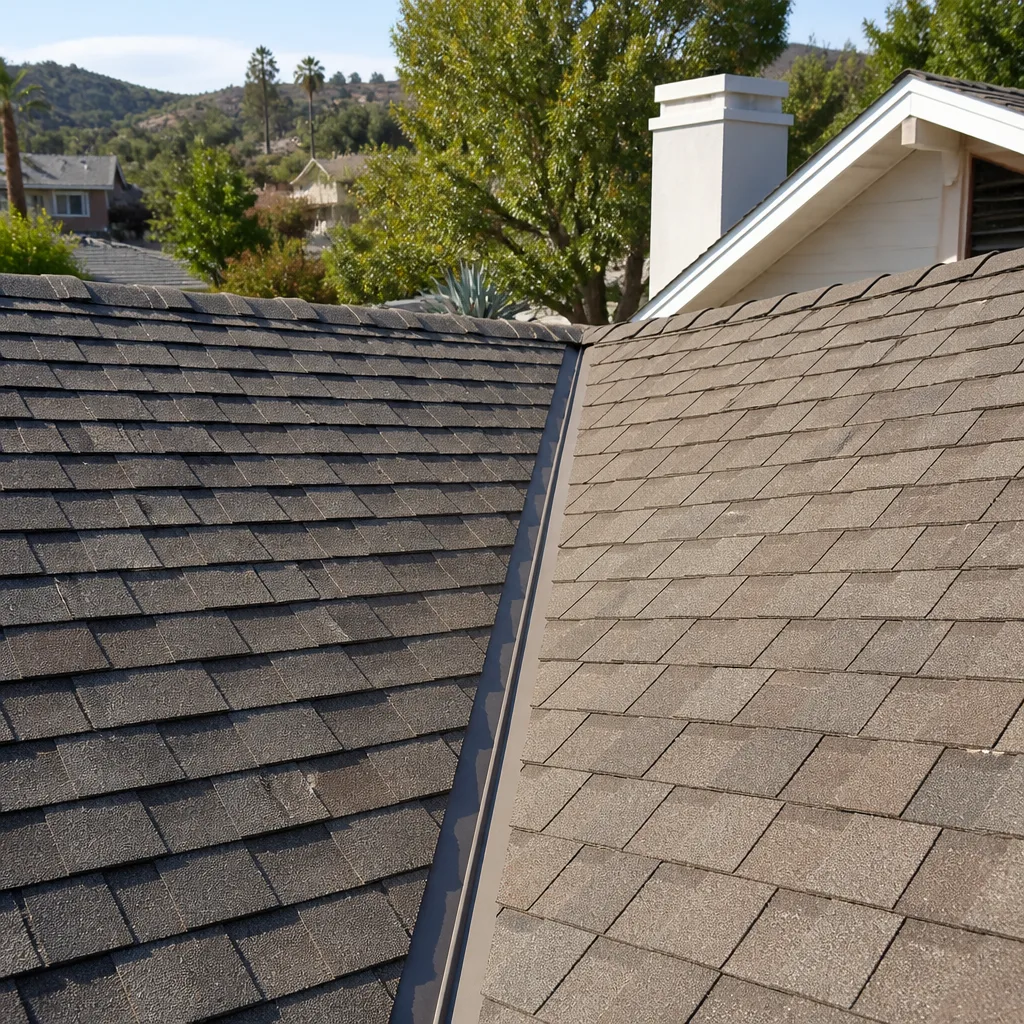
- Granule loss concentration. Granules will always end up in the gutter valley. The warning sign isn’t some granules – it’s granules that fill the same section of valley uniformly, season after season, while the adjacent valleys stay clean. That indicates one panel is losing its protective surface at a faster rate than the rest.
- Shingle blistering. Blisters are round, raised pockets on the shingle face, typically caused by moisture trapped under the mat. They indicate the shingle has reached the end of its service life, not just weathering. Blistering across more than a few panels means you’re within a couple of years of replacement.
- Alligator cracking. The cracked, leather-like pattern that shows the asphalt has dried out completely. Alligator crack patterns that travel in more than one direction across a single shingle indicate the mat itself has dried out. That’s a replacement signal, not a repair one.
- Flashing separation at parapet walls. On the low-slope sections, watch where the cap sheet or built-up roof meets the parapet wall. A gap or dull line under the flashing is water already getting behind it. Check it at least once a year before the wet months.
On the flat and low-slope portions of East Los Angeles roofs, look for ponding that stays 48 hours after a rain, seams that have lifted or opened at the lap, and any blistering in the cap sheet. If your roof is due for replacement, the right starting point is looking at roof systems from six leading manufacturers – GAF, CertainTeed, Owens Corning, IKO, Atlas, and Tamko – and choosing the material for your roof type and pitch. Tamko, for example, is common on value-tier replacements; CertainTeed and Owens Corning have tiered product lines for premium and mid-range. The choice changes with the roof, not the other way around.
Flatwork Signals: When Driveway Damage Means Base Failure
Not every driveway crack is a base problem. Some are just the concrete surface doing what it does over a few decades. The three signals below separate surface wear from failure underneath, and they’re worth knowing because in East Los Angeles flatwork, a failing base is the difference between patching a section and replacing the slab.
1. Edge pop-up. Walk the perimeter of the driveway where it meets the sidewalk, the garage apron, and the street. If the driveway edge has risen above the adjacent surface by a visible lip – a quarter-inch or more – that’s the slab heaving at the edge. Common cause: an expanding root, a tree on the parkway, or a failed subbase at that corner. Left alone, the heave spreads backward into the slab and starts cracking panels.
2. Joint widening. Every control joint should stay roughly the same width from end to end. If a joint has widened noticeably more at one end than the other, or the joint width has grown since you moved in, the slabs are separating. That means the base under one slab has settled more than the base under the other. Widening joints also let water get under the slab, which accelerates the settlement.
3. Surface delamination. Look for a section where the top layer of concrete has begun to flake or chip away, like a thin skin peeling off, leaving a rougher surface below. That’s delamination. It usually signals a placement or finishing problem from years ago, or a section of concrete that was poured too wet and never developed full surface strength. Delaminated sections will spall in a hard freeze-free but wet winter – each rain cycle knocks a bit more material loose. Delamination is repair-if-localized; if it covers more than a few panels, the surface is done.
If your driveway is at the replacement stage, the paver route deserves a look. Hardscape installations using Belgard, Unilock, Techo-Bloc, Tremron, Cambridge Pavers, or Oldcastle systems handle East Los Angeles’s shifting clay soil better than a rigid slab because the joints can flex. Explore the material options through our driveway & pavers page to see the categories. A properly based paver driveway installed now will still be walking distance to its own warning signs in 25 years.
Window Frame Warnings in East Los Angeles’s Aluminum Stock
Aluminum single-pane windows are the default in most East Los Angeles homes built before the 1990s. They age in predictable ways, and three of those patterns signal real problems with the window frame, not just the glass.
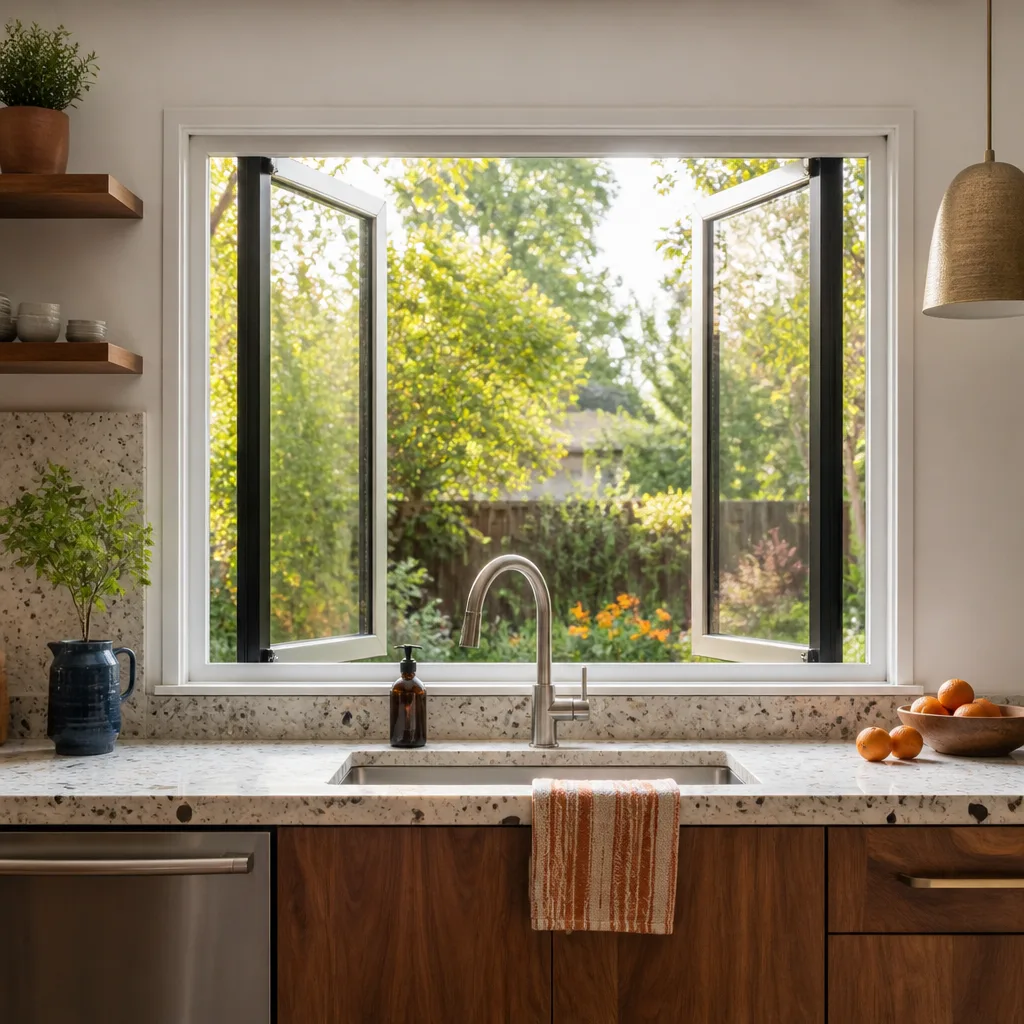
Frame bowing. Stand inside the room and look along the vertical edge of the frame against a straightedge or the adjacent wall corner. An aluminum frame that appears to bow inward or outward at the midpoint – usually the center of the vertical jamb – is under stress. Common causes: the framing around the opening has moved, the window was installed out-of-square, or thermal expansion has expanded the aluminum more than the frame. Bowing frames lose their weather seal, and water finds the gap.
Gasket compression failure. The weatherstripping gasket on a sliding aluminum window compresses over time. Run your finger along the jamb where the sash meets the frame. A gasket that’s flat, shiny, or hard (as opposed to soft and slightly ribbed) has lost its sealing ability. You won’t see this; you’ll feel it as a draft or find a thin line of fine dust on the sill after a dry, windy day. Gasket failure is a common entry point for the fine dust that coats East Los Angeles window sills in the dry months.
Condensation between panes. If you’ve already replaced some windows with dual-pane units and you see fogging or condensation between the panes, the insulated unit’s seal has failed. That’s a replaceable dual-pane unit, not necessarily a whole-window replacement, but the frame should be checked at the same time. If the frame is the original aluminum, that’s usually the moment to consider a full window replacement – a new insulated unit in an old bowed frame won’t seal properly.
When you do replace, window and door lines from Mr-Glass and Therma-Tru are common options for East Los Angeles homes, and choosing the right one for the room matters: egress windows in bedrooms, sliders on patios, entry doors with the right thermal break for the location. Our Construction East Los Angeles team handles window and door installations as part of the full exterior envelope, which means the framing, flashing, and stucco patching are done in the right sequence rather than by three different trades.
Fence Warnings: Repair Now or Replace Soon
A fence has a finite number of repairable years, and the four warning signs below tell you where you are in that run. Read them together. Any one alone is a maintenance item; two or more together on the same run usually means replacement is the better investment.
Post lean angle. Sight down the run of posts from one end. Every post should sit roughly plumb. A post leaning more than a few degrees, and still moving season to season, means its footing has lost grip on the soil. In East Los Angeles’s clay-heavy soil, this usually happens after a wet winter when the ground swells and shrinks around the post. A single leaning post can often be reset. Three or more on the same run will need to be reset or replaced, and once you’re at that point, the rails and pickets are usually going too.
Concrete footing heave. Look at the concrete collar at the base of each post. If the collar has lifted or cracked, or a visible ring of soil has pulled away from it, the footing has heaved. That’s a bigger problem than post lean, because it means the footing is moving as a unit. When footings heave, posts break free at the collar and you’re replacing the posts, and often the footer.
Rail-to-post fastener corrosion. This is the East Los Angeles microclimate’s fingerprint. Check every fastener – screws, nails, hangers – where the rail meets the post. Rust streaks, soft or powdery galvanized coating, and fasteners that wiggle when you push the rail are all signs of advanced corrosion. Fastener failure is silent: the fence looks fine, then a rail drops after the next wind event. If you find two or more corroded fasteners on the same post, the post’s fastening is done.
Panel racking. Push the fence panel gently from the side. If the panel flexes easily or moves independently of the post, the fasteners have loosened or backed out, usually from the corrosion above. A racked panel will eventually rack fully and sit at an angle. Racked panels on a metal fence should be replaced, not re-fastened, because the fastener holes are already elongated.
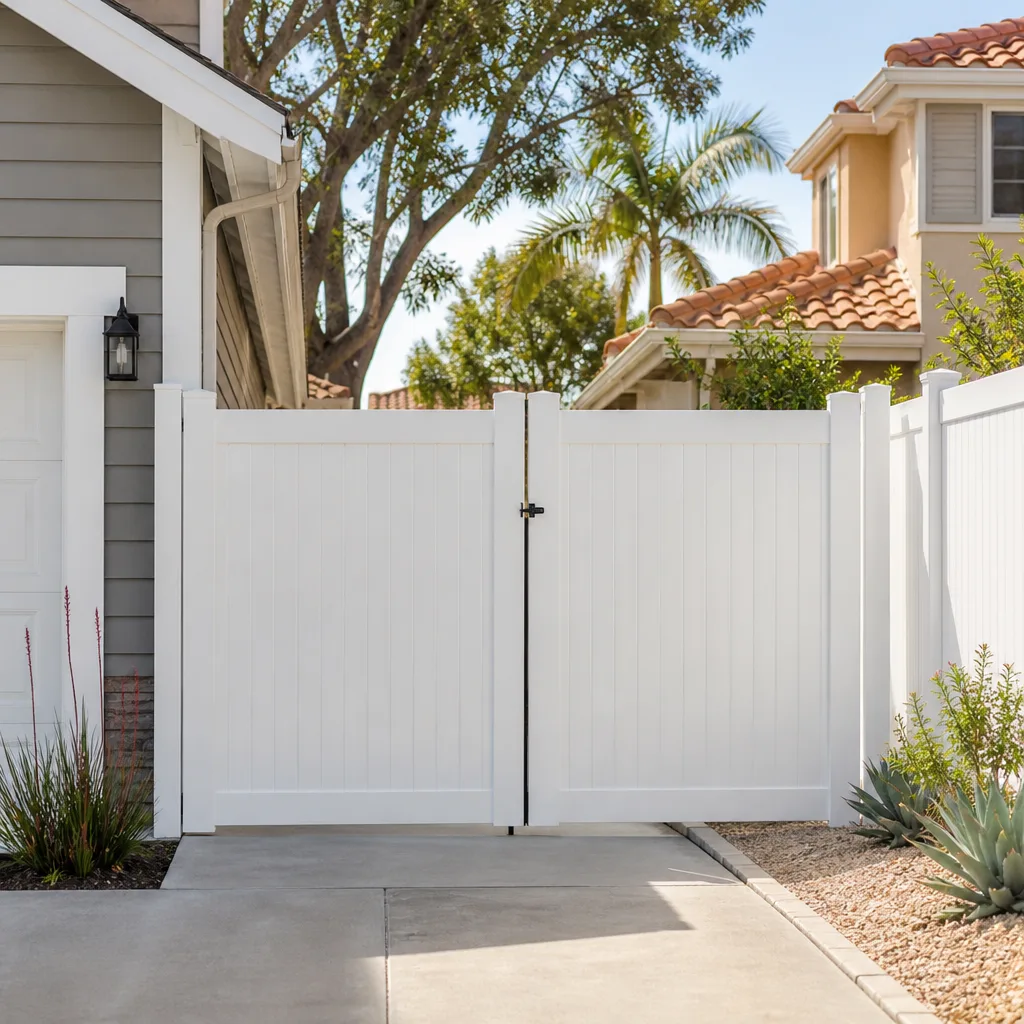
Fencing material choices matter for East Los Angeles because of this pattern. Vinyl fencing avoids the fastener corrosion issue entirely, ornamental steel with proper galvanizing will outlast the wood, and pressure-treated wood needs re-fastening roughly every five to seven years in this climate. If you’re replacing, look at our fence installation page for the material options, and ask specifically about fastener and footing specifications, because those are what fail in East Los Angeles first.
The Six-Month Exterior Walkthrough
None of the warning signs above surface in a single inspection. They become patterns over time, which is why we recommend a two-times-a-year walkthrough that takes about 30 minutes and hits the same checkpoints in the same order. Do the walk in the spring and in the fall. Take photos so you can compare the same corner, the same joint, and the same gutter valley side by side.
- Start at the front and walk the driveway. Check edge pop-up at the garage apron and the sidewalk. Eye the joint widths along the longest joint. Look for surface delamination on the panels nearest the street. Note any new lip height.
- Walk the stucco walls. Starting at the front corner, follow the wall and look at every window and door. Note any new diagonal crack, mark it with a pencil at both ends, and measure it. Compare to your last set of photos.
- Look up at the roofline. From the ground, using binoculars or your phone’s zoom, scan the shingle field for missing tabs, blisters, and alligator cracking. Check the gutters for settled granule deposits. Look at the parapet flashing on any flat section.
- Check every window and door from outside. Run your finger along the gasket at the jamb. Look for fogging between panes. Sight along the vertical frame for bowing against the wall edge.
- Walk the fence line. Sight down the post run. Check every post collar for heave. Check the fasteners at rail-to-post junctions. Push test each panel.
- Take photos and note the date. Save them side by side with your previous walk so you can spot movement, not just defects.
Do this twice a year and you’ll spot most of these patterns six to eighteen months before they become expensive. The comparison between walks is more useful than the walk itself, because movement is the variable that turns a normal defect into a warning sign.
What to Do When You Spot a Warning Sign
You’ve found a pattern. Now what? The sequence matters more than the speed. The instinct to call the first specialty contractor you can find is usually the wrong first move, because most of these warning signs cross trade boundaries. A stucco crack might be foundation, framing, or cosmetic. A window frame warning might be the window or the wall. A driveway heave might be the slab, the base, or the tree root.
- Photograph and measure. Take a photo of the defect and, where possible, a measurement. A crack width written on the photo is worth more than three opinions over the phone.
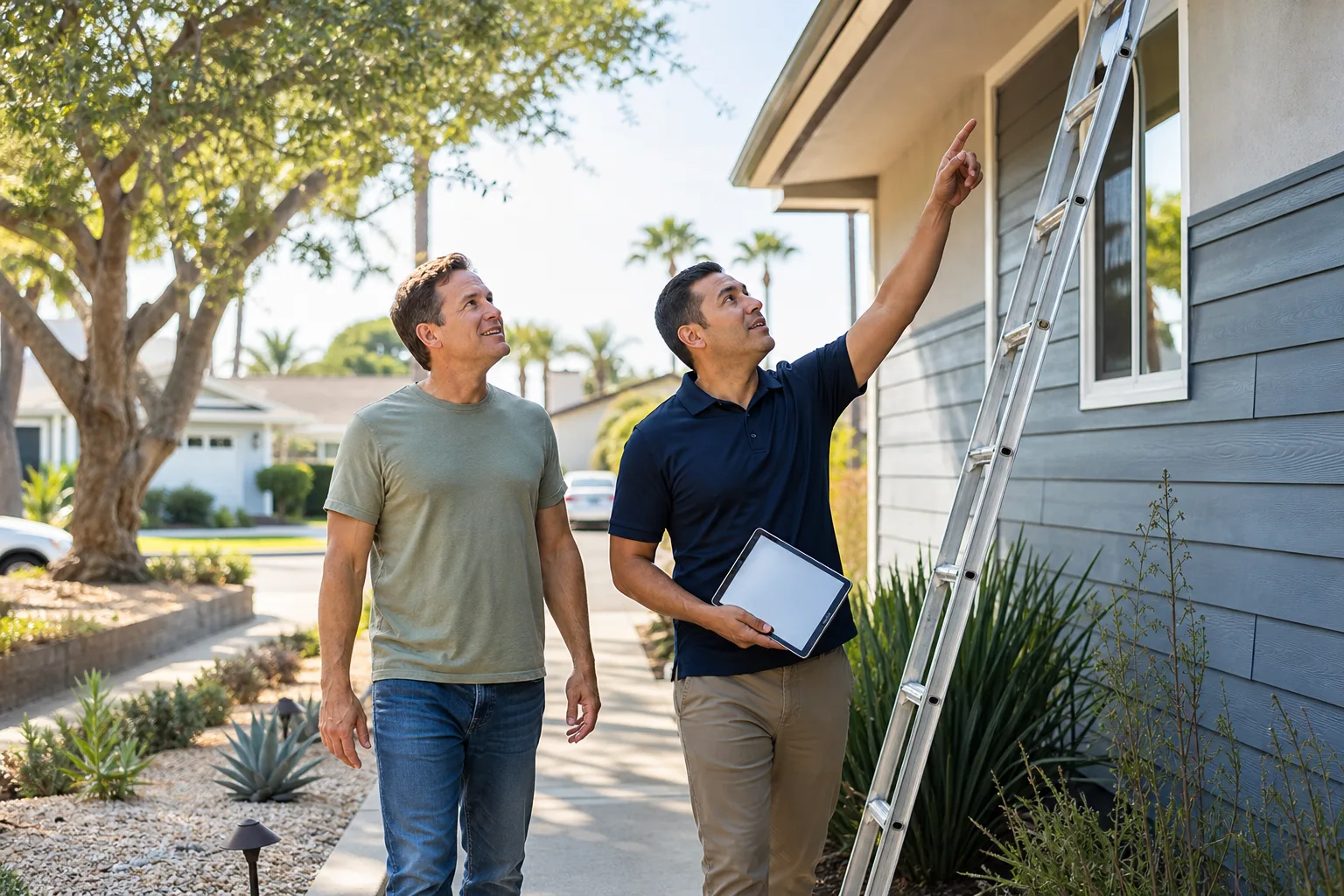
- Get a sequence diagnosis. Ask a contractor to walk the exterior with you and tell you what the sequence of repair should be – not just the fix. Sequence is where most projects go wrong. Roofing before windows, for example, so no fresh window work gets hit by roofing debris. Stucco patching after window installation, so the patching covers the new flashing. If the contractor can’t explain the sequence, they’re not seeing the whole picture.
- Get a written scope. Ask for a written estimate that names the products and the sequence. It should be free and it should be itemized. A verbal estimate on a multi-trade scope is not useful.
- Move on the pattern, not the single defect. A single hairlines crack is a watch item. A repeated pattern is the one you schedule.
We’ve seen homeowners in East Los Angeles replace a window in an already-bowed opening, then pay to re-replace the window eighteen months later after the framing movement continues. Get the pattern read first. The wrong-sequence repair costs more than the right-sequence repair every time.
Common Mistakes to Avoid
- Treating every crack as a crack. A map-cracked stucco wall and a corner-running diagonal crack look different in a photograph and are read differently. If you repaint without reading the pattern first, you’ll be reading the next crack from scratch.
- Calling a single trade for a multi-system warning sign. A window-frame warning in East Los Angeles is often a framing or envelope issue, not a glazing issue. Calling a glazing specialist first gets you a new pane in the wrong frame.
- Ignoring the parapet flashing because the flat roof looks fine. The low-slope sections fail at the wall junctions first, and the spots that fail are the ones you cannot see from the ground. A walk that skips the parapet edge is a walk that misses the earliest warning sign.
- Repairing a driveway edge pop-up by grinding the lip. Grinding the lip takes away the evidence, not the heave. The slab edge will rise a gain, usually a few months later, and you’ve lost the timeline.
- Re-fasten a racked fence panel onto the same fastener holes. The holes are already elongated. The new fasteners will back out within a season.
- Rushing to replace after one walk. The whole point of the six-month walkthrough is that it gives you the baseline. One walk tells you what’s there. Two walks tell you what’s moving.
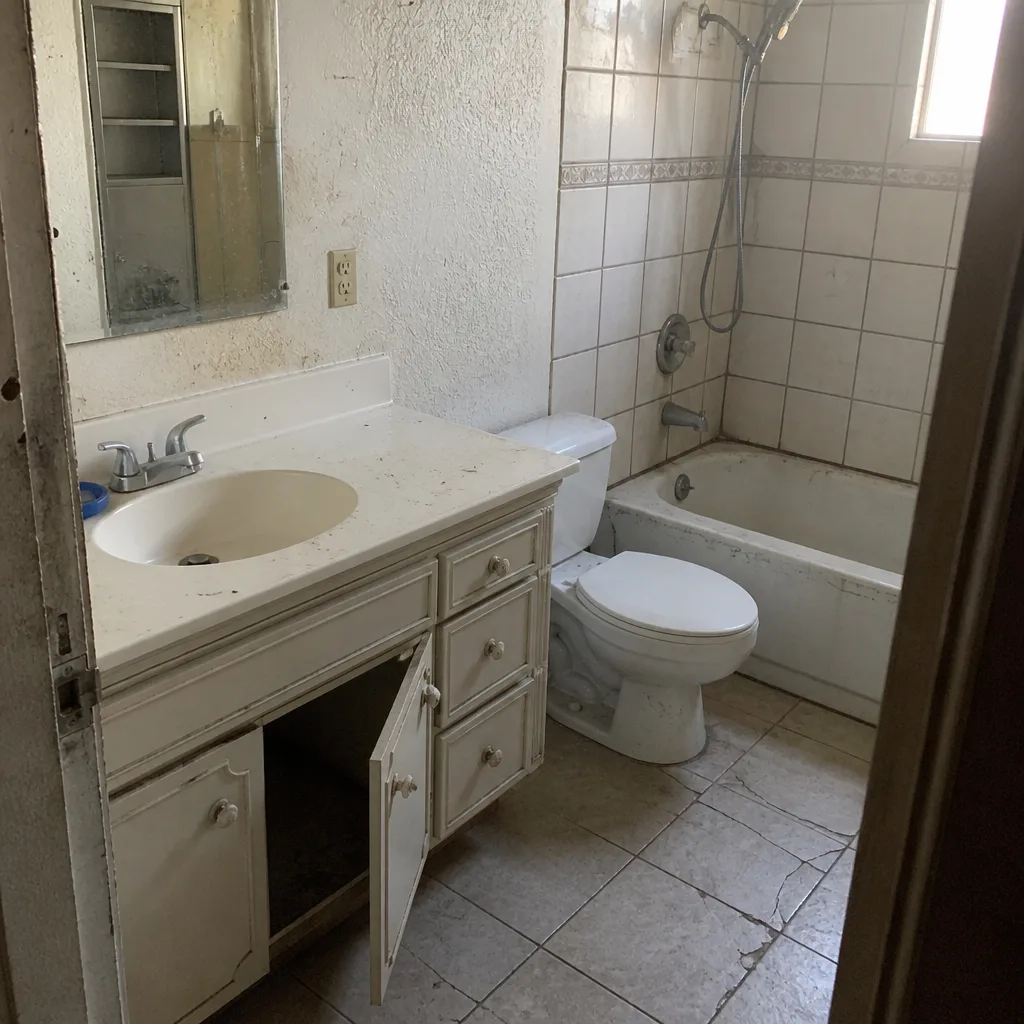
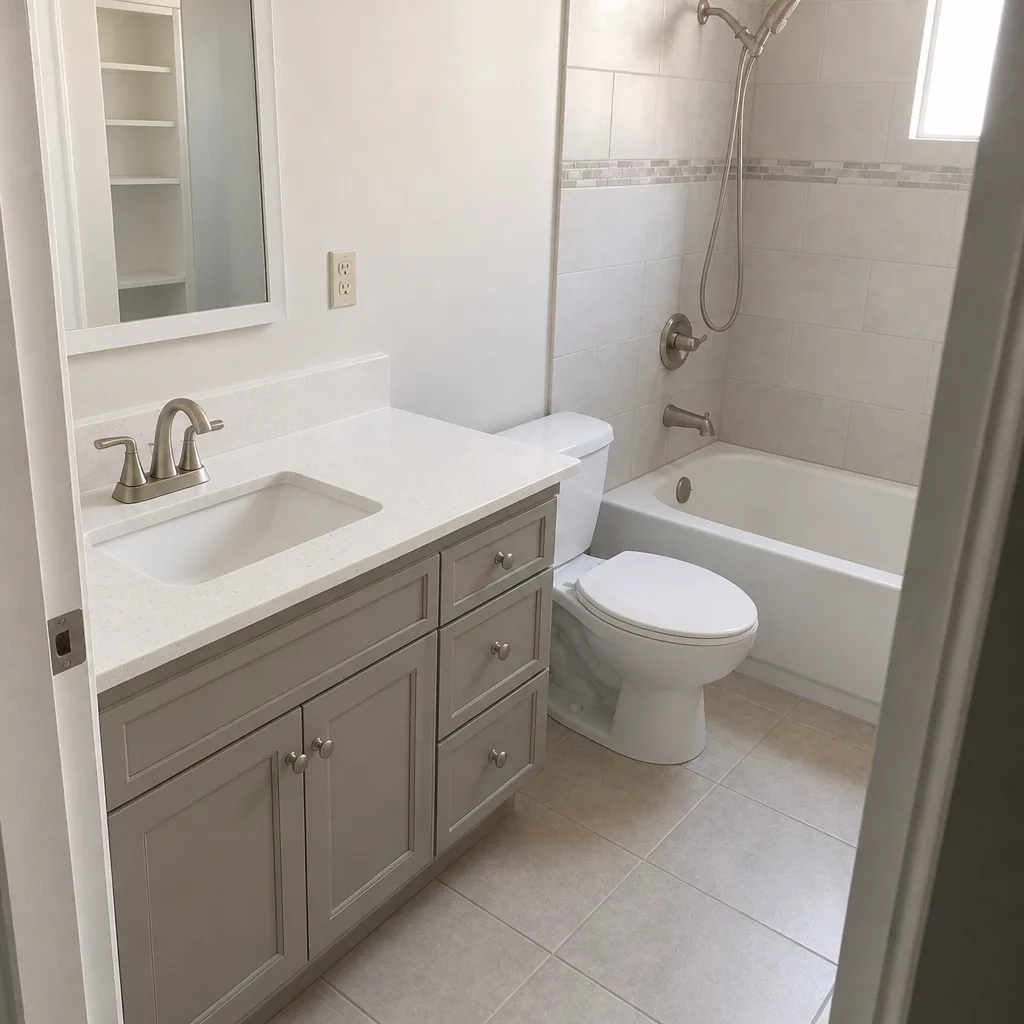
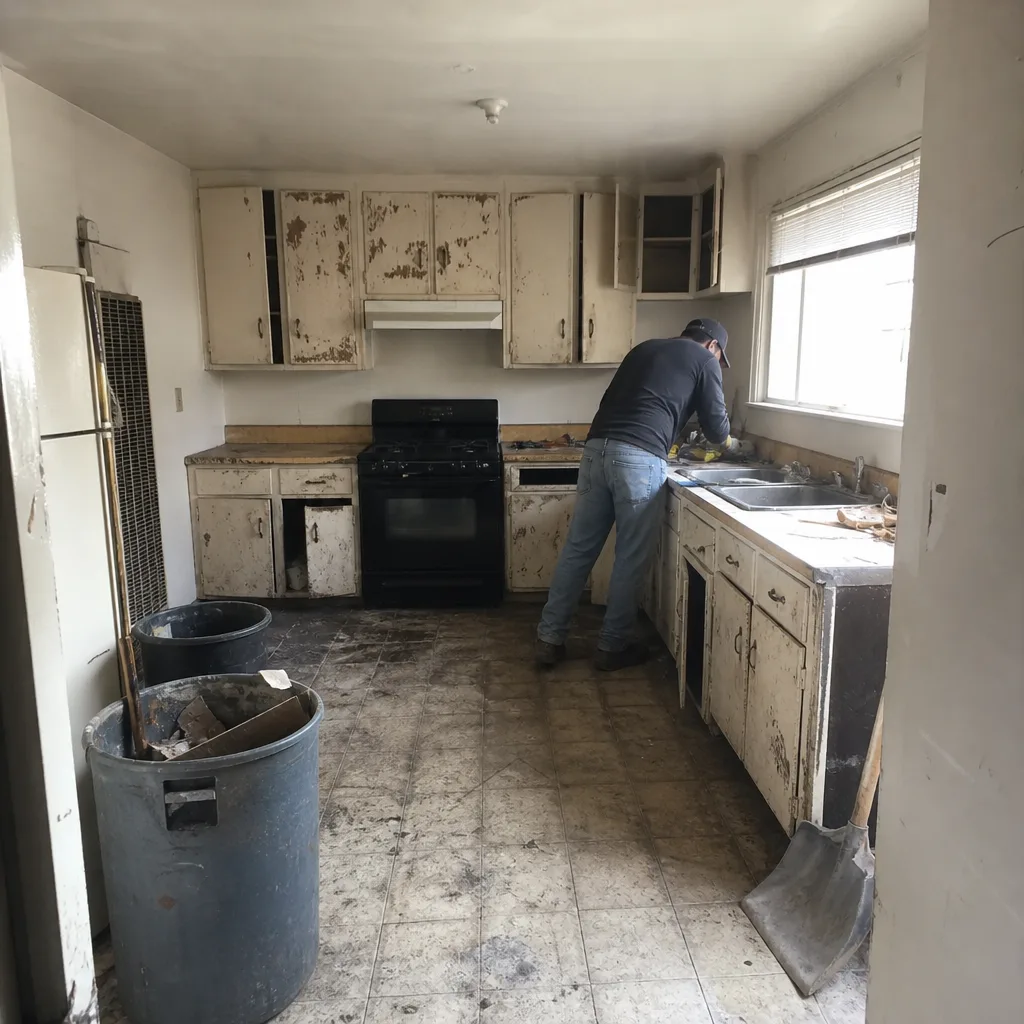
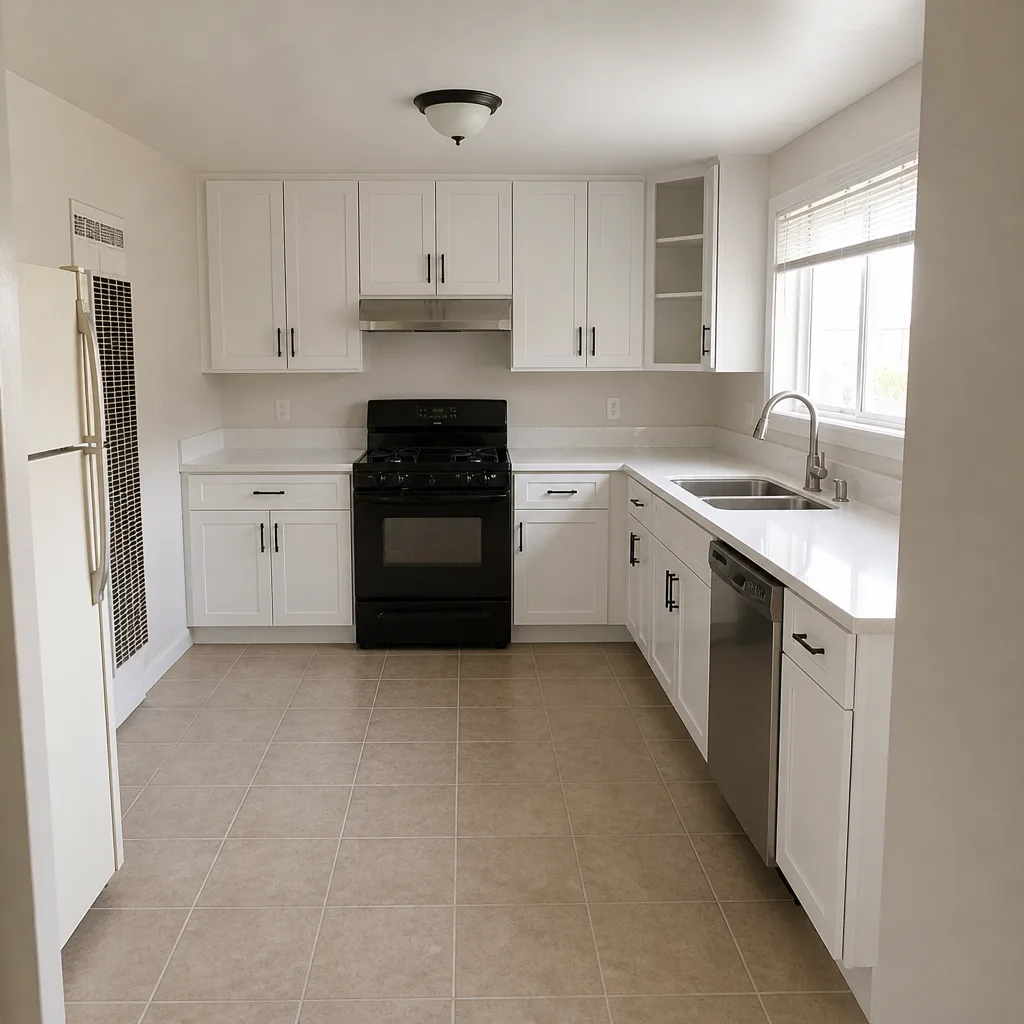
See the difference
 Before
 After
 Before
 After
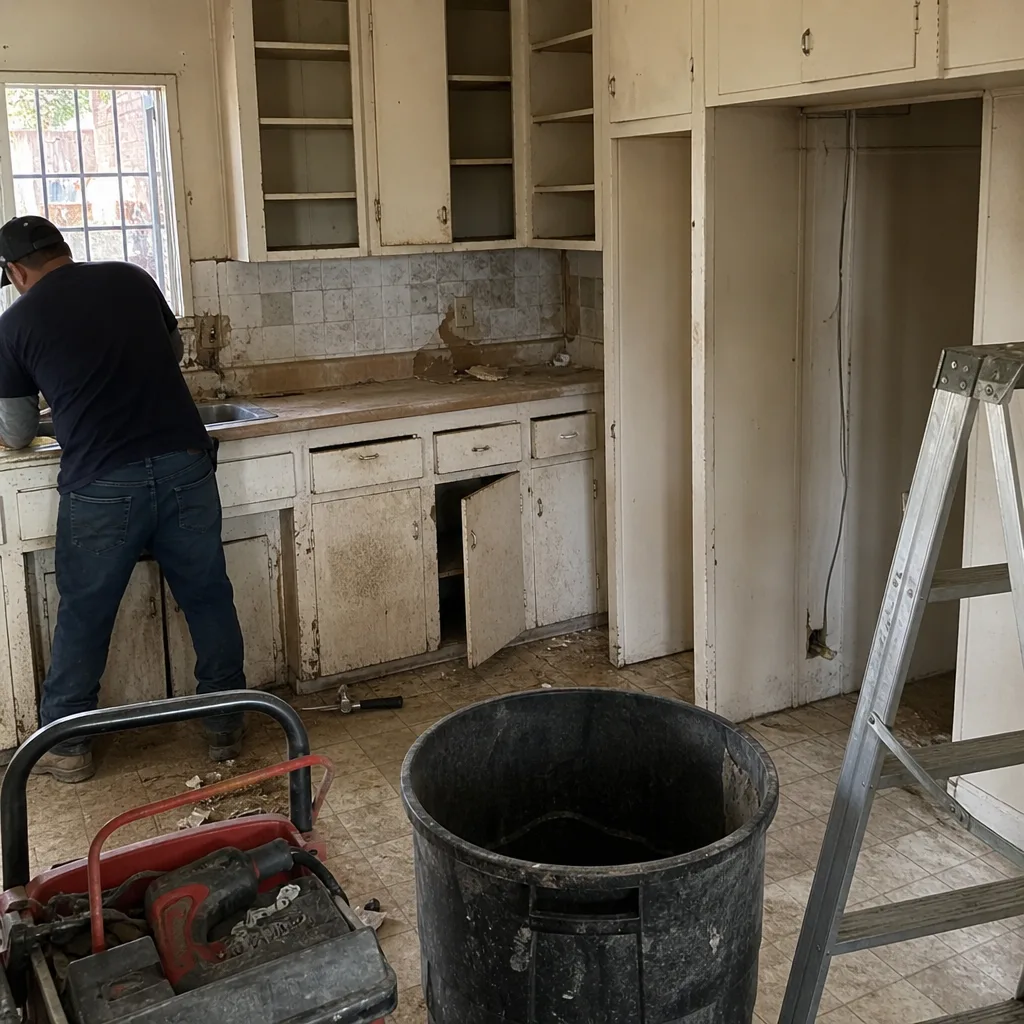 Before
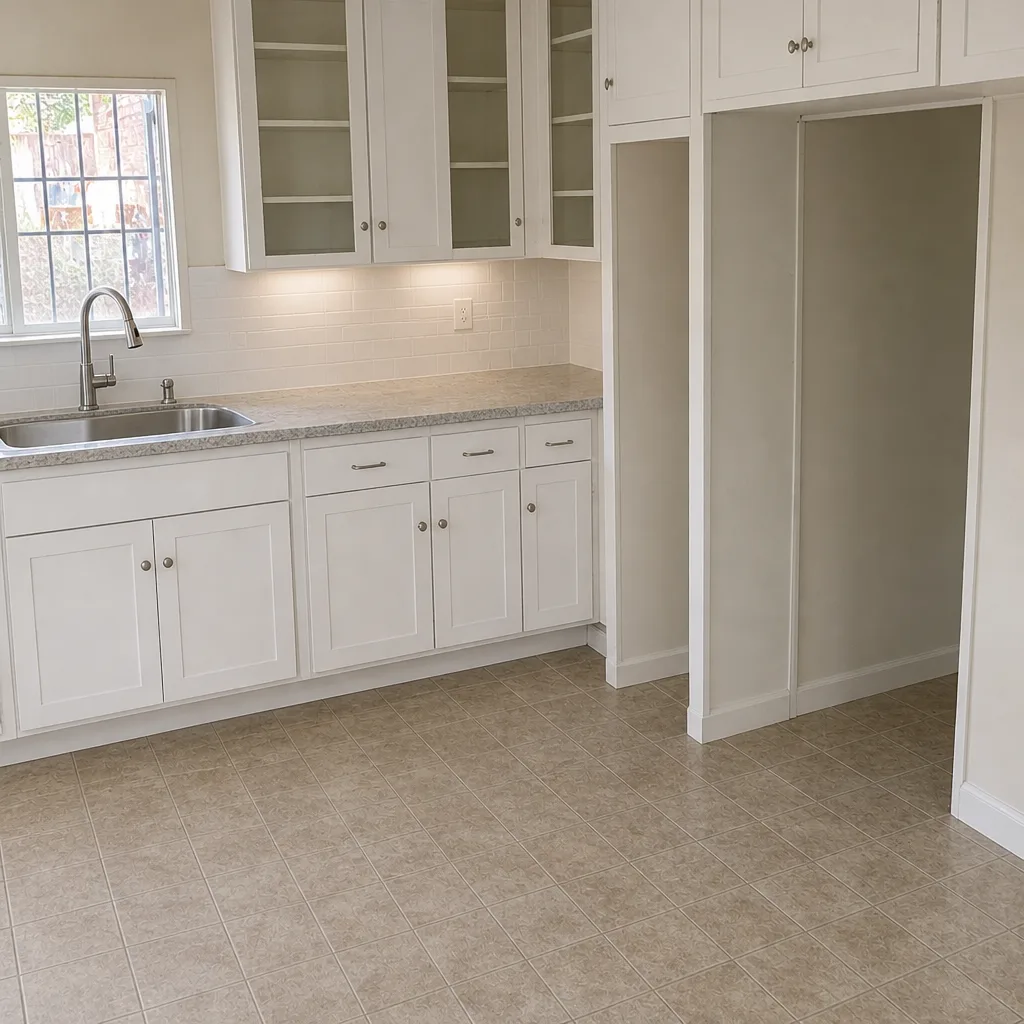 After
When to Call a Professional
Call a professional when the pattern crosses trades, when a defect has moved between your last two walkthroughs, or when you can’t confidently read which of the categories above a defect belongs to. Diagonal stucco cracks at window corners, a bowed window frame, a driveway edge that has risen above the sidewalk, or a fence run with two or more leaning posts are all worth a professional read. So is any roof found with blistering or alligator cracking across more than a couple of panels, because that’s a replacement decision, not a repair one. Construction East Los Angeles offers free estimates in East Los Angeles – call (844) 320-6084 to schedule a walkthrough. We answer 24/7. Fast dispatch from 7am to 7pm, Sunday through Friday.
Frequently Asked Questions
A repeating pattern is the most reliable sign: multiple diagonal stucco cracks at window corners, granules settling in the same gutter valley season after season, or a driveway edge that has risen above the adjacent surface by a visible lip. Single defects can be cosmetic; a repeating pattern is a structural or system signal worth a professional look. Call (844) 320-6084 to schedule a free exterior walkthrough.
Shrinkage cracking is fine, shallow, and interconnected like a map, with no clear direction; structural cracks (settlement or seismic) are typically diagonal, wider, and run from a defined point like a window corner or slab edge. Measure the crack now and again in 60 days – a crack that’s grown is a structural signal, a crack that hasn’t is usually surface. If you’re unsure, get it read: (844) 320-6084 for a free estimate.
Yes, if the granules are concentrated in the same section of valley season after season while adjacent valleys stay clean. That concentration signals one roof panel is aging faster than the rest, which is a warning sign of a developing failure rather than uniform wear. Call (844) 320-6084 to have roof wear patterns read against the roof’s age and material type.
Yes, that local soil type is the reason edge pop-up on driveways and concrete footing heave on fences appear here more often than in drier inland areas. Clay swells when wet and shrinks when dry, which lifts and drops both slabs and fence footings. If you’re seeing either pattern, call (844) 320-6084 for an estimate on repair or replacement.
Repair if there’s one leaning post and the footing is still holding; replace if three or more posts on the same run are leaning and the footings have heaved, or if the rail-to-post fasteners are showing advanced corrosion across multiple posts. Repairing a run at that stage usually costs as much as replacing it within a few years. Call (844) 320-6084 to talk through repair versus replacement on your fence line.
Sometimes, if the bowing is minor and the gasket is the only failure. Not if the frame itself is bowed, because a new gasket in a bent frame won’t seal. On original aluminum windows in East Los Angeles, gasket compression failure usually indicates the window is at the end of its service life. Call (844) 320-6084 for a free estimate on repair versus replacement across your windows.
The Bottom Line
The visible warnings that matter in East Los Angeles are patterns, not single defects. Read stucco cracks by their orientation and width. Read roof granules by their concentration. Read driveway joints by their widening. Read window frames by their bowing. Read fence posts by their lean and their footing condition. Do the walkthrough twice a year, photograph, and measure. The pattern is the signal, and the walkthrough is the tool that shows you the eighteen-month window before the expensive repair becomes the unavoidable replacement. The written estimate sets the price, and the estimate is free.
Our technicians have up to 8 years of experience reading exactly these patterns across the seven service categories we run – roofing, windows and doors, fencing, driveways and pavers, kitchen remodeling, bathroom remodeling, and home additions & ADU work. Because these trades sit under one contractor relationship, one team plans the sequence and one team is accountable from the first walkthrough to the last inspection. Whether you’re looking at a full exterior envelope repair or a phased whole-home renovation with an ADU addition, you get a single point of contact rather than a chain of independent specialty trades.
Call (844) 320-6084 for a free estimate. We answer 24/7. Fast dispatch from 7am to 7pm, Sunday through Friday. We’ll walk the exterior with you, read the patterns, and put the sequence in writing before any work begins.
Written by the team at Construction East Los Angeles.